
Eggplant diseases fall into a few groups: wilts, stem and root rots, leaf spots and mildew, fruit rots, and viruses. Start with where the symptoms begin. Roots and stem base point to soilborne disease. Leaves point to leaf spots or mildew. Fruit points to fruit rot. Then check the pattern across the plant, because wilt diseases often affect one side first. Prevention matters most, since most eggplant diseases have no cure once a plant is infected.
Eggplant is attacked by a range of fungi, bacteria, oomycetes, and viruses. Many of them look alike at first, so a careful diagnosis saves time. This guide sorts the main diseases by where they start. It describes their key signs and the prevention steps that work for most of them. For the specific leaf patterns, the linked articles go deeper. Compare yellowing leaves and curled leaves with these disease symptoms before assuming an infection.
How do you identify an eggplant disease?
Begin with the part of the plant that is affected. The 2021 Florida Plant Disease Management Guide for eggplant lists the main diseases with their symptoms and controls. Sorting by where the symptoms start is a good way to narrow that list. Soilborne problems start at the roots and stem base. Leaf problems start on the foliage. Fruit problems start on the fruit surface or at the blossom end.
Then look at the pattern. Does the wilt affect one side only? Do lesions start on lower leaves and climb upward? Is the damage spreading quickly in wet weather? Notes on the pattern will narrow the list faster than any single symptom.
Which eggplant diseases cause wilting?
Several diseases wilt eggplant, and they act differently. Bacterial wilt can kill a plant suddenly, with little yellowing before death. Verticillium wilt progresses slowly, often starts on one side, and stunts growth. Fusarium and Phytophthora can also wilt plants, along with other causes covered in Why Is My Eggplant Plant Wilting?.
For wilt, the stem offers a useful test. Verticillium shows tan veins in a lengthwise cut near the soil line, according to University of Minnesota Extension. Bacterial wilt can show bacterial ooze when a cut stem is suspended in water. Both tests help confirm a diagnosis.
Which eggplant diseases attack the stem and base?
Phomopsis blight can girdle seedlings at the soil line, producing dark brown lesions that turn gray in the center. Seedlings may collapse and die. Phytophthora blight attacks the stem base too, with dark, sunken spots that spread upward and cause wilting above them. Southern blight shows a progressive wilt with yellowing and necrosis beginning on the lower leaves, especially in hot, moist weather.
Keep the soil well drained. The Florida guide identifies avoiding excessive soil moisture as important for managing Phytophthora blight. Best Soil for Eggplant: pH, Mix, and Amendments covers drainage.
Which diseases cause leaf spots and mildew?
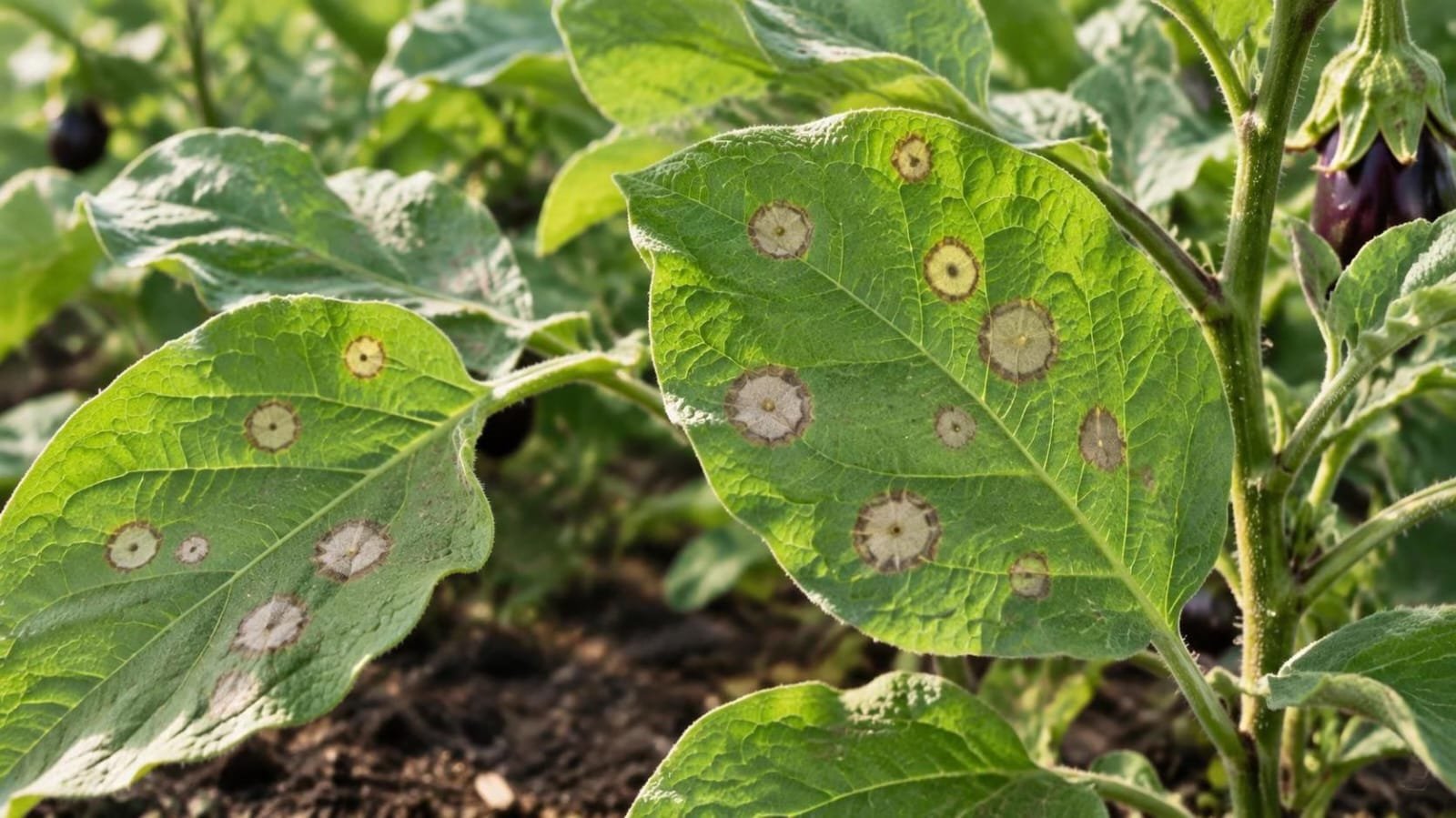
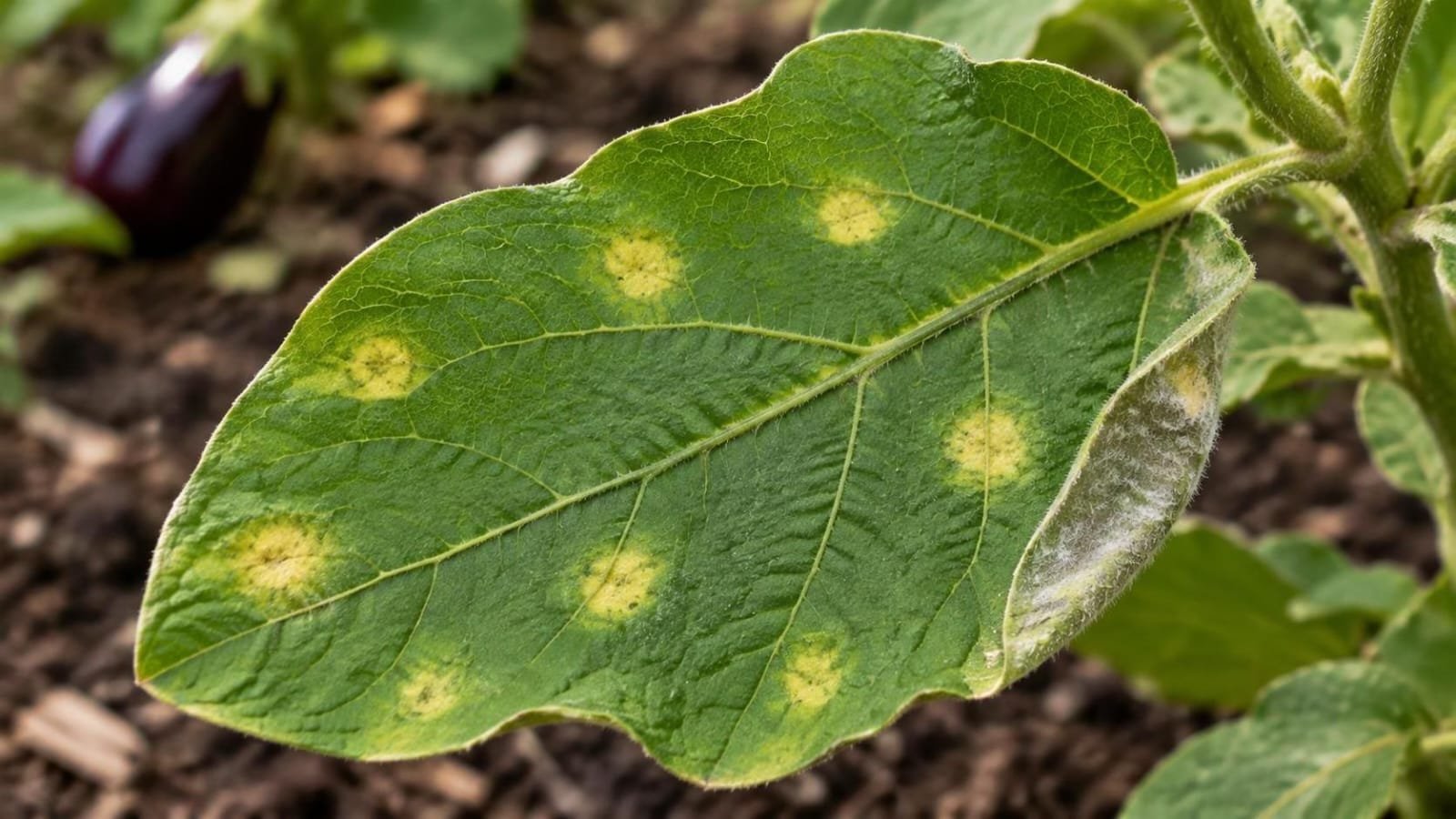
Phomopsis also causes leaf lesions, which look circular, gray to brown, with a light center. Severe infection tears and yellows the leaves, then they drop. Powdery mildew is a different problem with a white or grayish coating. White Spots on Eggplant Leaves: Powdery Mildew or Sunscald covers how to tell mildew from sun damage.
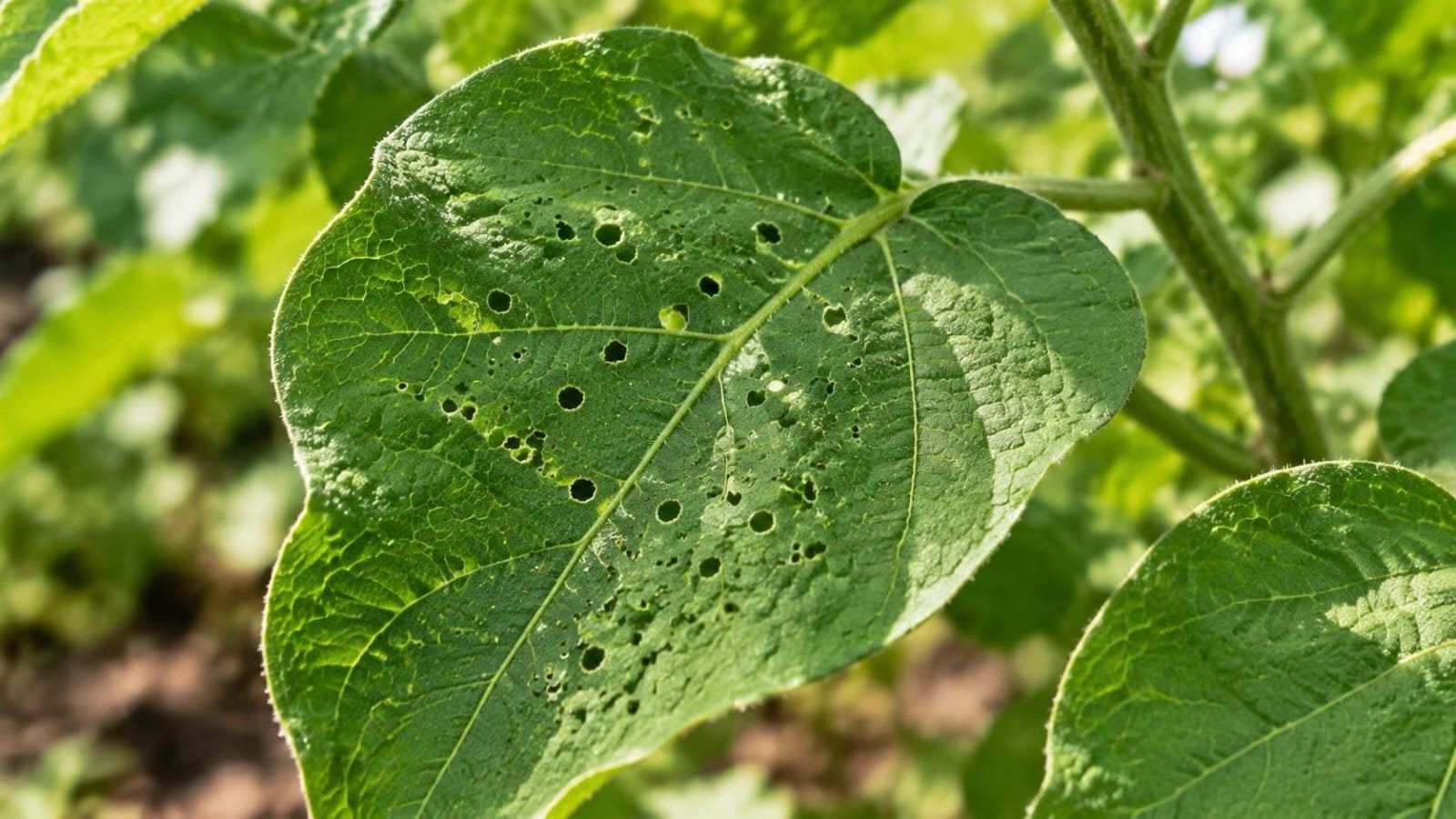
Leaf spots that start on the lower leaves often point to a leaf disease, and rain can speed their spread. Holes with missing leaf tissue instead of colored spots may be insect damage; see what causes holes in eggplant leaves. Remove badly infected leaves, and keep foliage as dry as you can.
Which eggplant diseases rot the fruit?
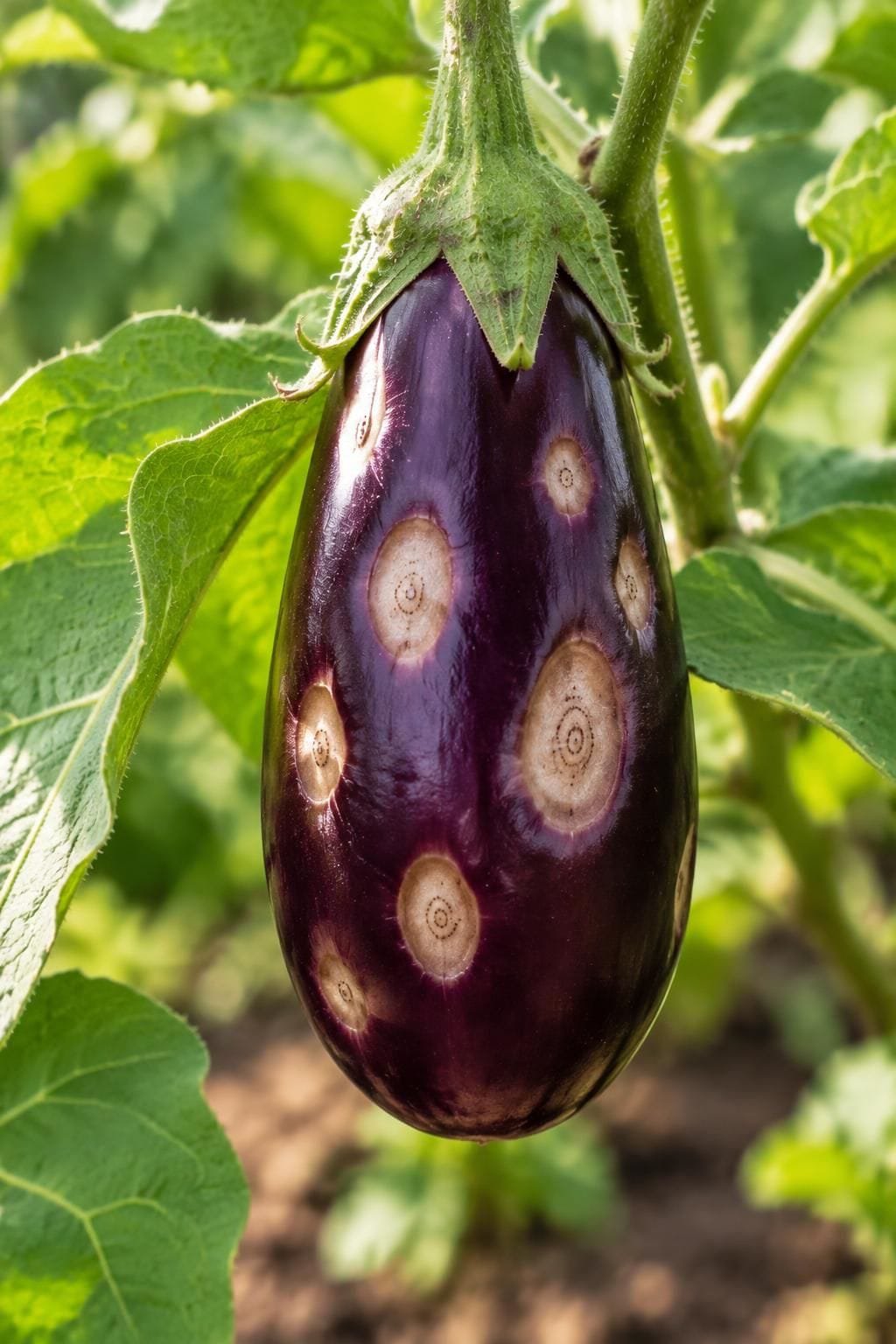
Phomopsis can cause pale, sunken, oval spots on fruit with concentric rings of tiny black dots. Phytophthora produces soft, dark, water-soaked spots that enlarge quickly on fruit. Pythium fruit rot starts with a bleached, white blossom end that turns tan and wrinkled. University of Minnesota Extension describes the Phomopsis and Phytophthora fruit spots in its diagnostic guide.
Fruit disease is worse in wet weather. Plastic mulch reduces the splash of Phytophthora spores onto fruit, according to the Florida guide.
Are viruses and damping-off common eggplant diseases?
Cucumber mosaic virus causes mottled yellow and light green leaves. Leaves may be misshapen or shoestring-thin, and fruit may show yellow blotches or brown rings. Viruses have no cure once a plant is infected. Control the insects that spread them, and remove plants that are clearly infected.
Damping-off kills seedlings at the soil line. Causes include Fusarium, Pythium, and Rhizoctonia, according to the Florida guide. A clean, well-drained seed mix and moderate watering are the first defenses. How to Grow Eggplant From Seed covers seed starting in order.
How do you tell the diseases apart at a glance?
The table gives a quick comparison of the main eggplant diseases by where they start and their most useful sign. Use it to narrow the list, then confirm with the details in the sections above.
| Disease | Where it starts | Most useful sign |
|---|---|---|
| Bacterial wilt | Roots and vascular tissue | Sudden wilt with little yellowing; bacterial ooze from a cut stem in water |
| Verticillium wilt | Roots, moving up the plant | Slow wilt on one side; tan veins near the soil line |
| Phomopsis blight | Stem base and seedlings, then leaves and fruit | Dark lesions at the soil line; gray-centered leaf lesions; pale oval fruit spots |
| Phytophthora blight | Stem base, roots, fruit | Whole-plant wilt that turns brown; soft, dark, water-soaked fruit spots |
| Pythium fruit rot | Blossom end of the fruit | Bleached, then tan and wrinkled blossom end |
| Powdery mildew | Leaf surface | White or gray coating, with spread across the leaves |
| Cucumber mosaic virus | Whole plant | Mottled yellow and light green leaves; shoestring leaves |
Swipe sideways to see every column.
What prevention works across most diseases?
Rotation is the most useful habit. According to the Florida guide, avoid planting eggplant after pepper, especially after a confirmed Phytophthora blight outbreak. Rotate with a non-host crop, such as a grass crop. Clean transplants also matter, since only disease-free plants should go into the bed.
Good airflow and room between plants reduce humidity around the leaves. Remove plant debris at the end of the season, and clean tools between beds. Keep the soil evenly moist, since both drought and waterlogged soil stress the plant. How Often Should You Water Eggplant? covers the watering schedule.
When should you send a sample for diagnosis?
If you can’t tell the cause, take photos of the whole plant and the affected parts. Then contact your county extension office. Include both healthy and affected tissue, and note when the symptoms started and how fast they spread.
Chemical controls depend on the disease and the crop, and many have specific label rules. Follow the label directions for rate, timing, and safety. Your extension office can tell you which options are registered for home eggplant in your area.
How do the leaf problems fit into the bigger picture?
Diseases are one part of the leaf story. Eggplant Leaves: Identification, Problems, and Care covers healthy leaf patterns and the general causes of change. Why Are My Eggplant Leaves Turning Brown? covers the most common leaf change, and How to Grow Eggplant: Planting, Growing, and Care connects disease prevention to planting and harvest.
One thought on “Eggplant Diseases: Symptoms, Identification, and Treatment”