
Eggplant usually stops setting fruit for one of three reasons: nights that stay below about 60°F, water that swings between dry and soggy, or a transplant set out before the soil had warmed. A plant that looks healthy but drops its flowers is most often telling you about temperature or water. Check the overnight lows and the moisture a few inches down before you reach for fertilizer or a spray.
Most gardeners treat eggplant like a tomato and assume the answer is more water or more feed. Sometimes that’s right. But eggplant runs on a long, warm clock, often 70 to 120 days from transplant depending on the variety. A late start or one cold stretch in the middle of the season tends to show up as blossoms that never become fruit, so timing is usually the best clue you have.
What your eggplant’s symptoms are telling you
Before you change anything, match what you see to the most likely cause. The table is a starting point, not a verdict. Similar symptoms overlap, and some problems need a local extension office to confirm.
| What you see | Most likely cause | First check |
|---|---|---|
| Leaves look healthy, but flowers keep dropping | Cool nights or water stress during bloom | Overnight lows and moisture a few inches down |
| Whole plant droops on hot afternoons, recovers by evening | Heat or uneven watering | Whether the soil dries out between waterings |
| Big, dark green leaves, very few flowers | Too much nitrogen | Recent feeding, and whether the plant has been fed more than it needs |
Why eggplant flowers drop without setting fruit
Here’s the pattern that trips people up. The leaves are green, nothing is chewed, and the flowers keep dropping. That usually points to weather rather than disease. The ideal daytime range is roughly 80 to 90°F, and UC guidance notes that growth slows noticeably when nights stay below 60°F. Once the plant is flowering, low temperatures and weak light can make the pollen nonviable. The blossom looks normal, but it never becomes a fruit.
Water matters just as much during bloom. Stress at that stage can substantially reduce fruit set, so a dry spell in midsummer may cost you the fruit that would have ripened in early fall.
When the weather is cooperating and the set is still poor, try hand-pollinating. Gently shake the flowers or tap the stems to move pollen from one blossom to another. It takes a minute, and it often helps in a sheltered bed or a container on the patio.
When to transplant eggplant outdoors
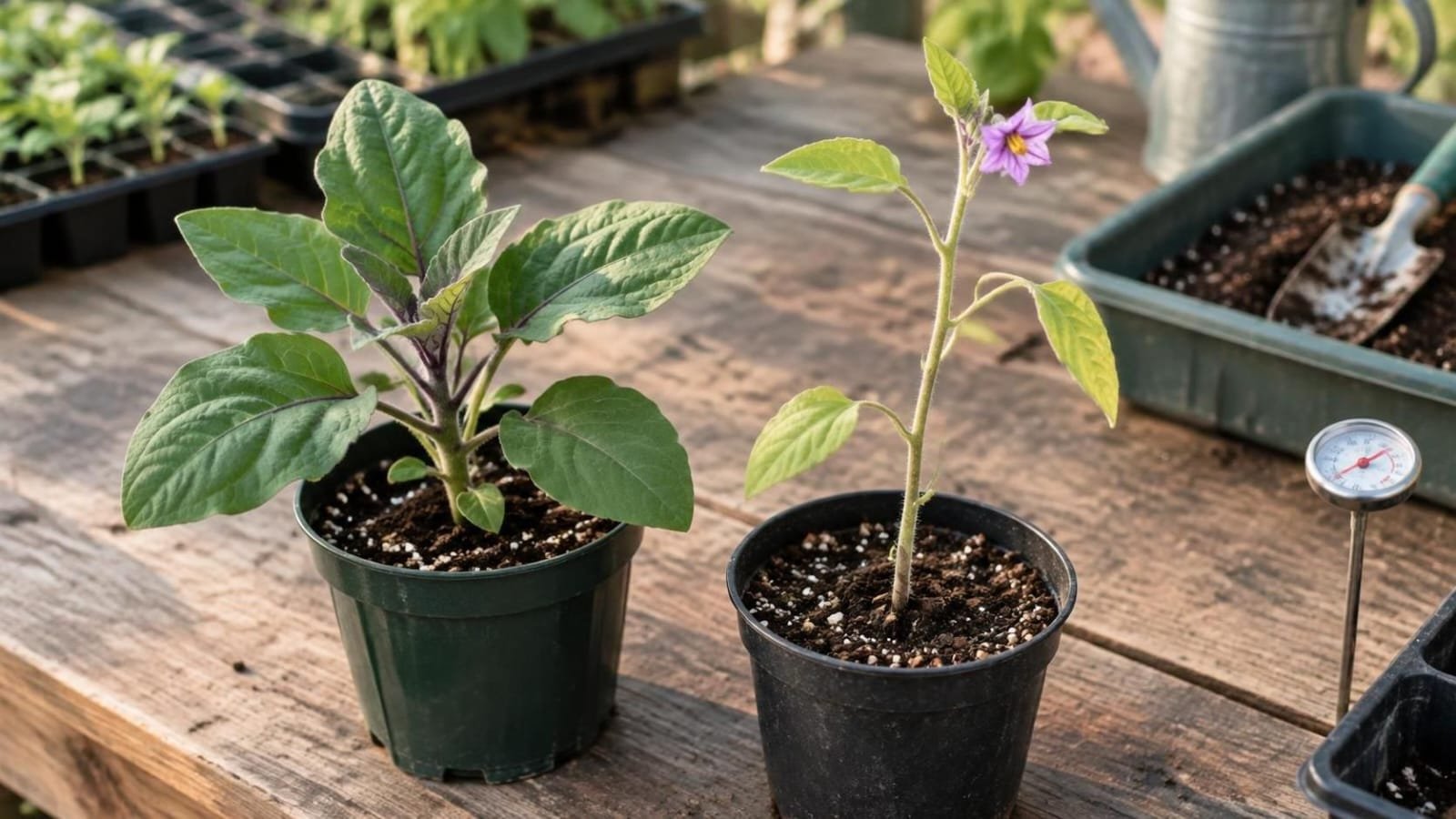
Most people go by the calendar first, but a better trigger is the weather. Our guide to when to plant eggplant covers the seasonal timing. UC Master Gardeners of Santa Clara County advise waiting until daytime temperatures are regularly above about 75°F. A plant set out earlier tends to sit and grow slowly while nights stay cool, and that lost time is hard to make up later in the season.
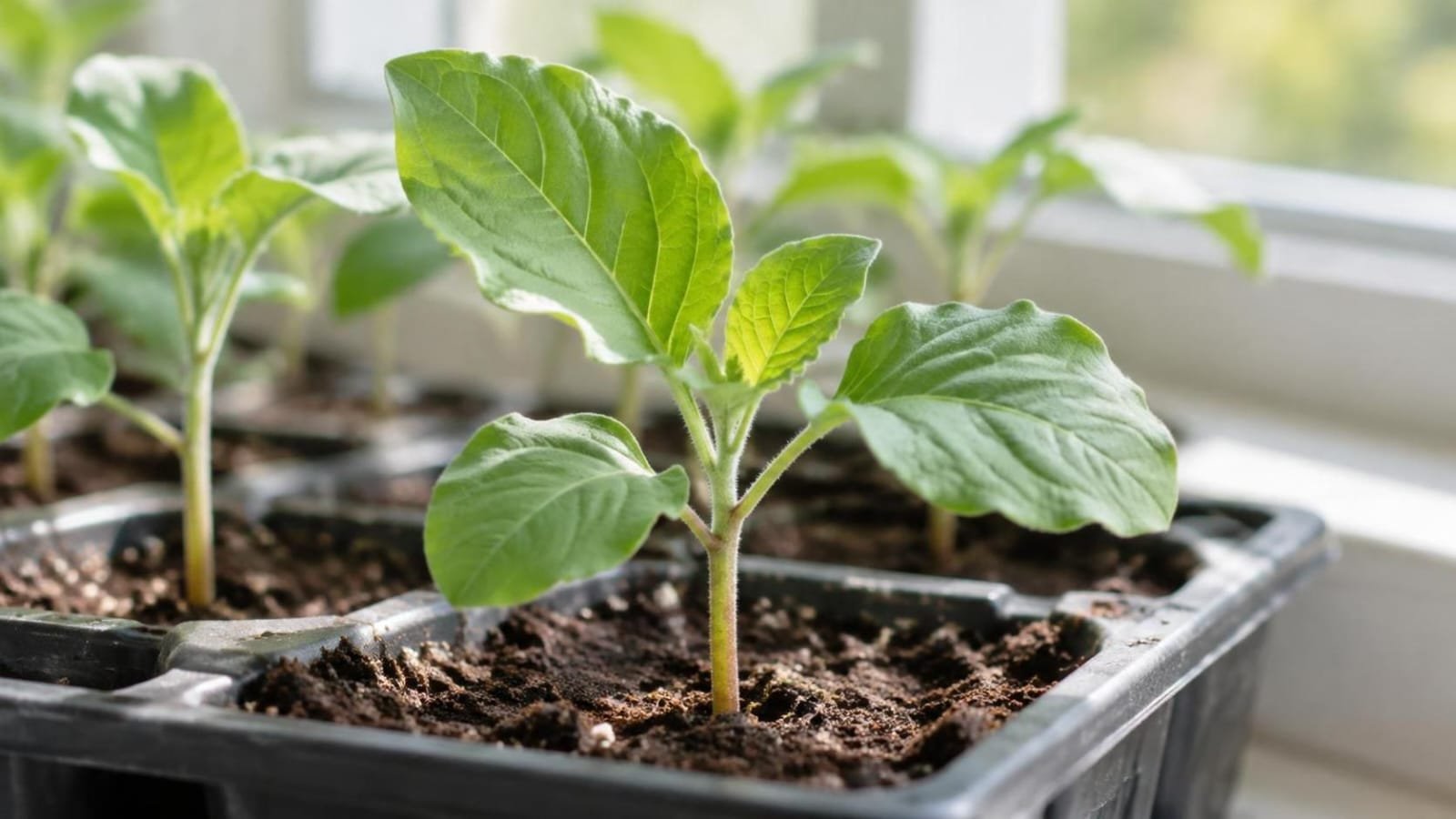
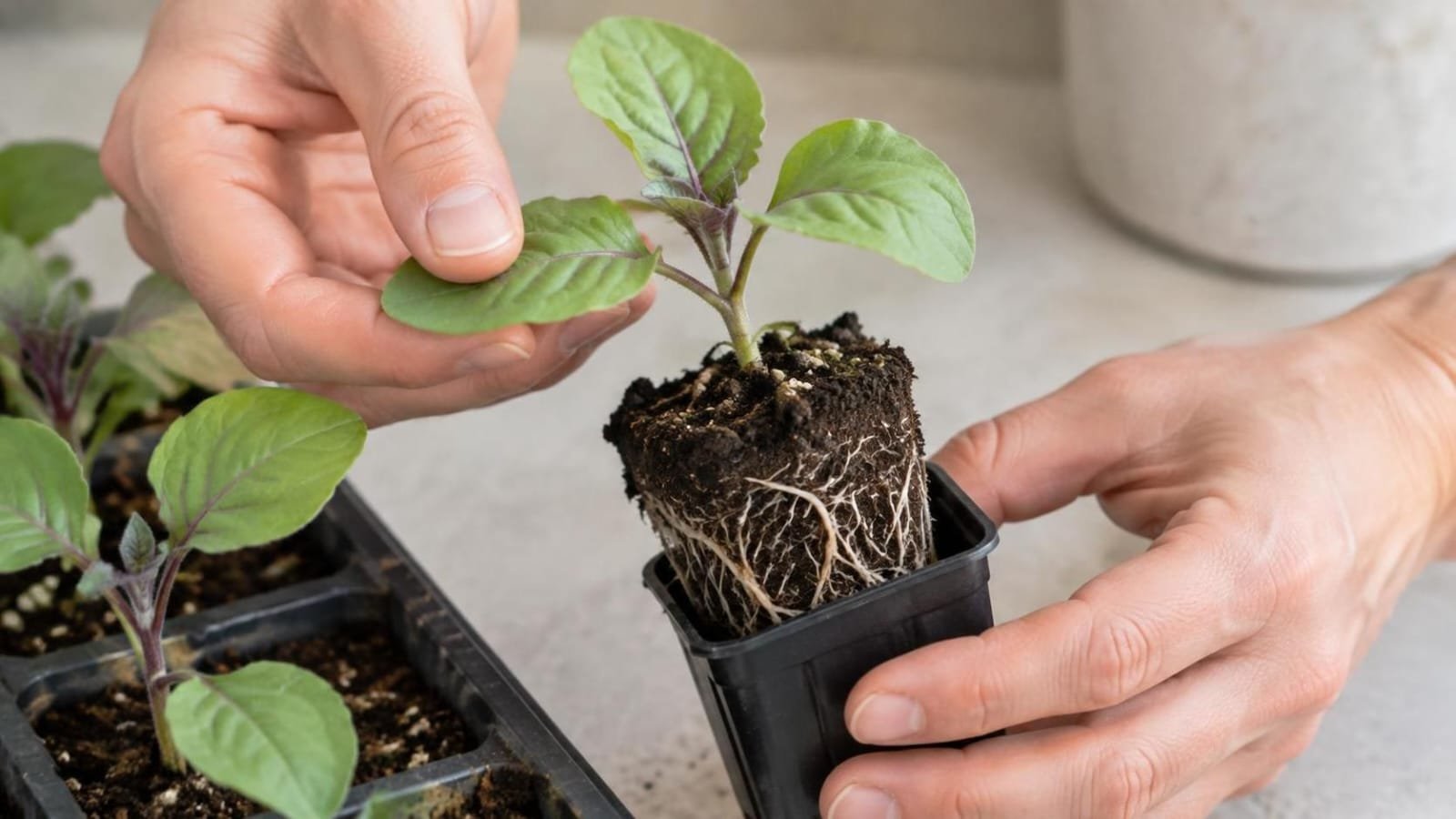
If you grow from seed, start the seeds about eight weeks before the day you plan to set them outside. A nursery transplant is ready at around three weeks old, with four to six true leaves and a stocky stem. Set it so the soil covers the stem up to the first set of true leaves, firm the soil around it, and water thoroughly. Space plants 18 to 24 inches apart. If your seedlings are getting crowded, repotting them into larger containers before they become root-bound avoids a setback. Our guide to growing eggplant from seed covers the indoor timing in more detail.
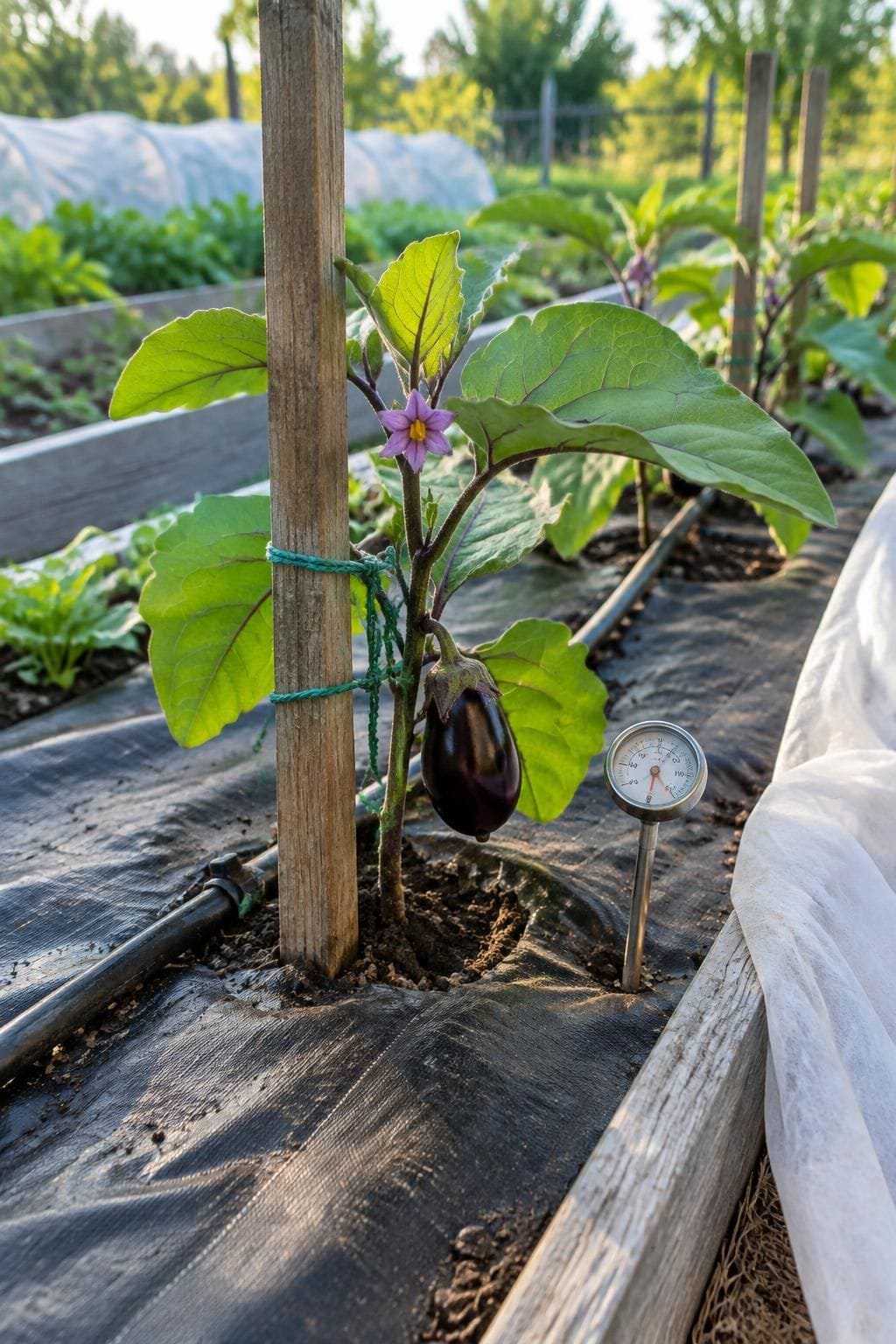
Summer transplants need a little help. Shade them at midday for the first week, or lay lightweight floating row cover over them until they settle in. Choose a variety that fits your season and space. Our guide to types of eggplant compares the options.
Soil and watering for eggplant
Eggplant does best in sandy loam. Heavier soil works if it drains well and doesn’t stay saturated. Aim for a soil pH of about 6.0 to 6.5, and mix in compost or other organic matter, which helps clay and sand alike. Squeeze a handful: if it forms a wet, sticky clump, wait before you work it. If it crumbles, you’re in good shape. Where drainage is poor, raised beds are a practical alternative, and large containers are another good option in cooler areas. Our guide to growing eggplant in containers and pots covers pot size and watering.
Eggplant roots can reach about two feet down, so a quick daily sprinkle that wets only the top inch leaves the deeper roots thirsty. Aim for deep, consistent watering at the root zone. Drip irrigation is the easiest way to do that without soaking the leaves, and it is the usual choice over overhead sprinklers, since wet surfaces and soggy roots invite root rot.
How much fertilizer eggplant needs
Good compost or well-rotted manure worked into the bed before planting covers most of what eggplant asks for. On soil like that, nitrogen may be the only nutrient you need to add, if any.
Once plants are three or four inches tall, many growers side-dress nitrogen in light, repeated doses every few weeks rather than one heavy feeding. Keep the fertilizer off the stems, and water it in. Follow the label on any product you use, because rates depend on the product, the crop stage, and your soil.
When to harvest eggplant
Flowers usually appear six to eight weeks after transplanting, and the first fruit is ready about three weeks after that, depending on variety and weather. Our growth-stage guide lays out that timeline from seed to fruit. Pick when the skin is glossy and the flesh gives slightly under your thumb. Once the color dulls and the seeds darken, the flesh turns bitter, so don’t let fruit hang too long.
Cut the stem with a sharp knife or pruners rather than twisting, since the stems are tough and twisting can damage the plant. Mature fruit left on the plant slows the production of new fruit, so regular picking keeps the plant producing.
If your climate doesn’t cooperate
If your summers never stay warm enough, the plant may not get the heat it wants outdoors. A greenhouse gives you warmer nights and a sheltered microclimate, which is why many growers in cool regions choose it. Our greenhouse guide covers the setup.
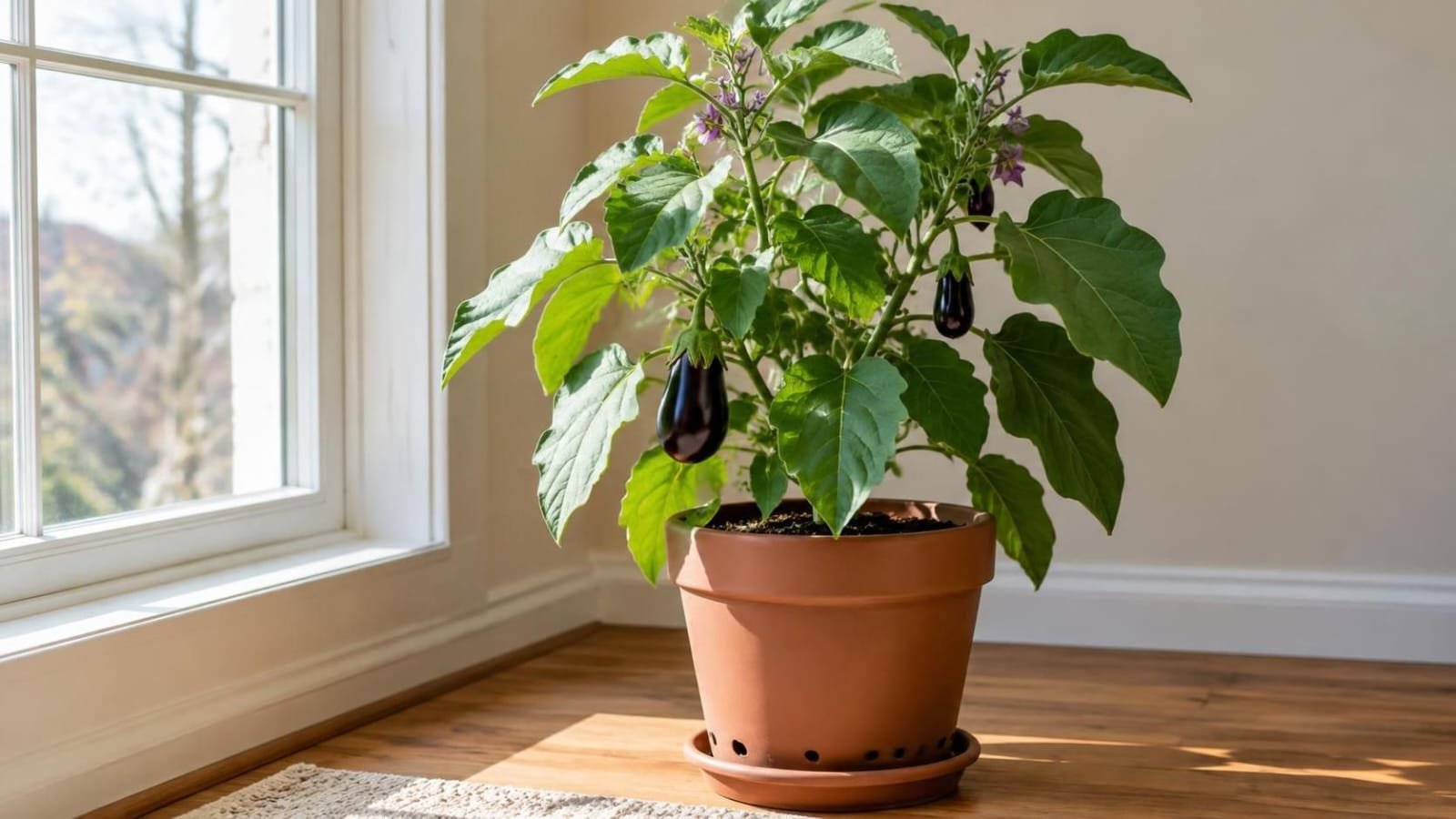
Indoors, the challenge is light. Eggplant needs strong light and, in many cases, hand-pollination to set fruit. Our indoor growing guide explains how to manage both. If you want to skip soil altogether, hydroponic systems remove the soil from the equation but replace it with a demand for steady nutrient and water management, so read up before you commit.
Eggplant is a perennial in frost-free climates, though most gardens grow it as an annual. If you’re curious about carrying a plant through winter, read about whether eggplant is a perennial or annual and how to overwinter it before you decide. Some gardeners also like to experiment with starting from a store-bought fruit, and that guide explains what to expect from the method.
Frequently asked questions
Why does my eggplant have flowers but no fruit?
The most common reasons are nights that stay below about 60°F during bloom and dry spells that stress the plant while it is flowering. Check the forecast and the soil a few inches down. If the weather has been steady and watering consistent, hand-pollinating is a reasonable next step.
Is it normal for the first flowers to drop?
Sometimes. If the weather turned cool or the soil dried out during that stretch, the plant is responding to conditions. Once the weather settles and watering is steady, later flowers often set fruit. If drops continue through a warm, steady spell, look more closely at watering and feeding.
How long does eggplant take to produce fruit?
Flowers usually appear six to eight weeks after transplanting, and the first fruit is ready about three weeks after that. Timing depends on the variety and the weather.
Should I add more fertilizer if the plant is growing slowly?
Check the temperature first. Slow growth in cool weather is usually about temperature more than nutrition, and feeding a cold-stressed plant won’t speed it up. If the plant is already lush and dark green, extra nitrogen is more likely to delay flowering than to help it.
2 thoughts on “How to Grow Eggplant: Planting, Growing, and Care”