
How much sun does eggplant need? Eggplant needs full sun. Plan for at least 6 hours of direct sun a day, and aim for 8 hours or more if you can. Midday sun is the strongest, so it drives most of the plant’s growth. Shade cuts flowering and fruit set. In very hot climates, some afternoon shade can help, but only after you have checked the plant’s response.
Sun is the first thing to get right when you plan an eggplant bed or container. A plant in partial shade may grow, but it usually flowers less, sets less fruit, and grows leggy. This guide explains how many hours you need, how to measure your site, and how to handle too much heat.
How many hours of direct sun does eggplant need?
University of California Cooperative Extension lists eggplant among fruiting vegetables that need full sun, defined as at least 6 hours of direct sun. The UC Master Gardener Program of Contra Costa County gives the same baseline for most vegetables. Many gardening sites say 6 to 8 hours, and some say 8 hours or more for the heaviest harvest.
The numbers agree on the minimum. They differ on the ideal. Six hours is enough for a plant to produce, but eight hours usually gives a stronger plant and a fuller harvest. If your site falls between those marks, the plant will still grow. Expect fewer flowers and slower fruit set near the lower end, especially in a cool summer.
Why does direct sun matter so much?
Eggplant makes its food through photosynthesis, and the leaves need strong light to make enough sugar for growth, flowers, and fruit. Direct sun carries far more light energy than shade, even on a bright but cloudy day. That difference explains why a shaded spot can look healthy but still produce little.
Heat matters too. Sun warms the air and soil, and eggplant grows best in warm conditions. A sunny, warm site keeps the plant on pace. A cool, shaded site slows growth, even when the plant gets some light.
How do you measure the sun in your yard?
Measure, don’t guess. Pick a few days in the growing season, and check the spot at about 9 a.m., noon, and 3 p.m. Note whether the spot is in direct sun or shade at each time. Count the hours of direct sun, not the hours of bright daylight. A spot that looks bright under open sky can still be shaded by a fence, a wall, or a tree.
Do the check more than once. Sun angles change through the season, and tree leaves fill in during summer. A spot that works in May may lose sun by July. Record the spot, the dates, and the hours, so you can compare the same site from one year to the next.

Is morning sun or afternoon sun better?
Both help, but they do different things. Morning sun is gentler and dries dew from the leaves early, which can reduce leaf diseases. Afternoon sun is usually the hottest part of the day. In cool climates, full afternoon sun gives the most warmth. In hot climates, the afternoon sun can push the plant into heat stress.
If your summers run hot, morning sun with light afternoon shade may work better than full sun all day. Check the plant during heat waves before you decide. Look for drooping, pale leaves, or sun-scorched patches on the fruit.
What does too little sun look like?
A plant in too little sun stretches toward the light. Its stems grow long and thin, and the leaves may look pale. Flowering slows, and the fruit that does form may stay small. Shaded leaves stay damp longer after rain or watering, which can raise the risk of leaf disease.
If a plant is leggy and blooming poorly, check the site before you change anything else. Moving the plant or pruning back shade from nearby trees often helps more than extra feeding or water.
Can eggplant get too much sun?
Yes, in extreme heat. Eggplant can wilt during the hottest part of the afternoon even when the soil is moist. A plant that wilts in the afternoon and recovers by morning is usually coping. A plant that stays limp or develops pale, burned patches on the leaves or fruit needs relief.
Light shade during the hottest part of the day can help in those cases. A shade cloth, a temporary row cover, or a nearby structure can cut afternoon heat and keep the morning sun. Don’t shade the plant all day, since that defeats the purpose.
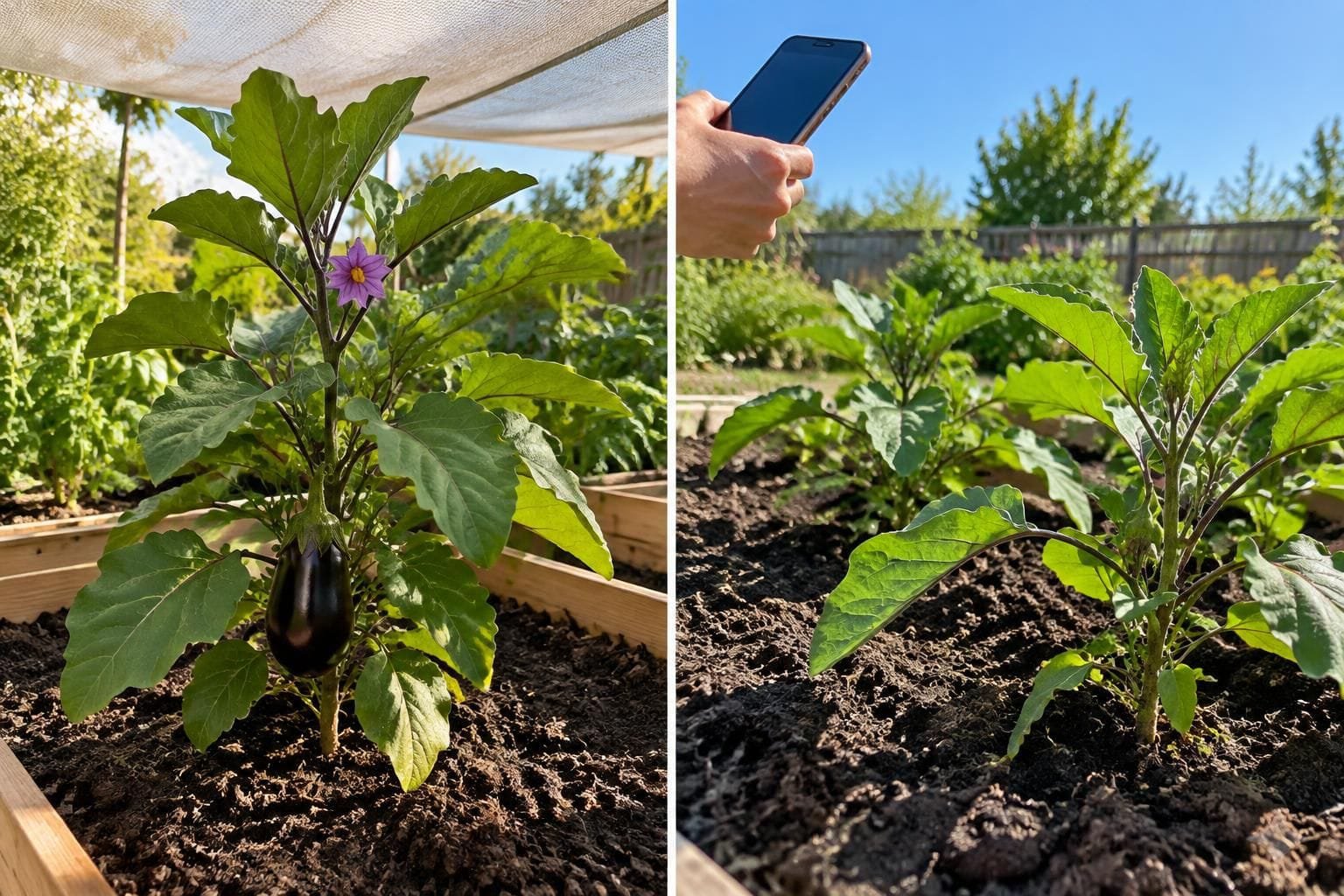
How do fences, walls, and trees block sun?
Buildings and fences often cast long shadows in the late afternoon. A wall on the west side of a bed can block the sun exactly when the plant needs it most. A tree that looks harmless in spring can grow dense enough to shade the bed by midsummer.
Place eggplant on the sunniest side of the yard, and keep tall plants from shading shorter ones. Plan the layout around the sun, not around convenience. How Far Apart to Plant Eggplant covers spacing in the bed, since crowded plants also shade each other.
Does a raised bed change the sun needs?
A raised bed doesn’t change the sun requirement, but it can change how the sun reaches the plant. Raised beds warm faster in spring, and the plant gets the same direct light as it would in the ground. How to Grow Eggplant in Raised Beds covers the bed itself.
How does sun work in containers?
UC Master Gardener Program of Contra Costa County notes that most vegetables need 6 to 8 hours of direct sun a day. It also notes that tall, sprawling crops such as eggplant need room for their roots. The same rule applies to containers. Choose a sunny spot, and move the pot if the light changes through the season.
Containers have one advantage. You can move them to follow the sun, or to escape extreme heat, which a bed can’t do. How to Grow Eggplant in Containers and Pots covers pot choice and placement.
What about indoor or greenhouse light?
Indoors, a window rarely gives the direct sun eggplant needs. A greenhouse can supply more light, but its glazing and shade cloth change the amount reaching the plant. Supplemental grow lights make up the difference. How to Grow Eggplant Indoors explains light setup in the home. How to Grow Eggplant in a Greenhouse covers protected-space light.
How does a sunny site change moisture needs?
A sunny site dries out faster than a shaded one, so it needs water more often during hot spells. For practical irrigation guidance, see How Often Should You Water Eggplant?. Check the soil before you water, and don’t assume the schedule from last month still works. Sun and water work together. A plant with full light and dry roots will struggle, and so will one that stays wet in shade.
What does a plant in enough sun look like?
A well-lit eggplant has short, sturdy stems and dark green leaves that stay flat and firm. Its flowers open regularly through the season, and new growth keeps pace with the old. The fruit forms and sizes up without long delays between set and harvest.
If the plant looks compact but stalls at flowering, look at light first, then at water and feeding. A plant can be sun-rich and still short on water, and that combination is easy to misread as a light problem.
What are the most common sun mistakes?
The most common mistake is choosing the spot for convenience. A corner by the shed is easy to reach, but it rarely gets the light eggplant needs. Another mistake is trusting a spot that looked sunny in spring and forgetting that it shades out in summer.
Crowding is the third mistake. Plants packed tightly still shade each other. The lower leaves get less light, and the middle of the plant stays damp. Give each plant room to receive light from more than one side.
What if your yard is only partly sunny?
If your site gets 4 to 5 hours of direct sun, you can still try eggplant. Expect slower growth and a smaller harvest. University of California Cooperative Extension notes that leafy vegetables, such as lettuce, do reasonably well in partial shade. Fruiting crops need full sun. Use the sunniest part of the yard for eggplant, and place leafy crops in the shadier spots.
A partly sunny yard may still suit a container that you can move. Put the pot in the sunniest spot you have, and shift it as the light changes. That flexibility often beats a fixed bed in a shaded corner.
How do you plan the sunny spot?
Pick the site before you buy plants. Measure direct sun for several days. Choose the spot with the most consistent light, and confirm nothing will block it by midsummer. Then match the plant to the site. When to Plant Eggplant covers when to move the plant out. Eggplant Growth Stages: Seed to Harvest shows how the plant uses that light through the season.
For the full growing guide, How to Grow Eggplant: Planting, Growing, and Care connects site choice to planting and harvest.


One thought on “How Much Sun Does Eggplant Need?”