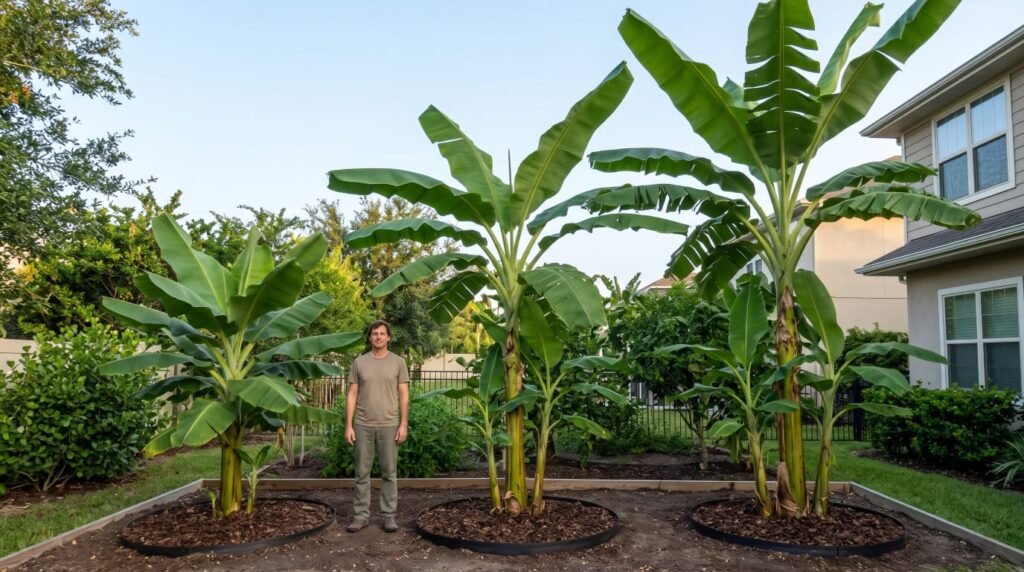
Most banana plants grown in gardens reach 6 to 30 feet tall, depending on variety. Dwarf types such as Dwarf Cavendish stop around 4 to 10 feet, standard garden bananas run about 12 to 20 feet, and the wild giant Musa ingens reaches about 49 feet (15 m).
Banana tree height comes down to two things: the variety, and where you put the tape. Most of us run the tape to the tip of the tallest leaf. That can add several feet that growers don’t count as the plant’s height. Dwarf Cavendish and Robusta belong to the same group of bananas, yet at maturity they can differ by many feet. So check the tag on your plant before you trust any single figure online.
What counts as the height of a banana tree
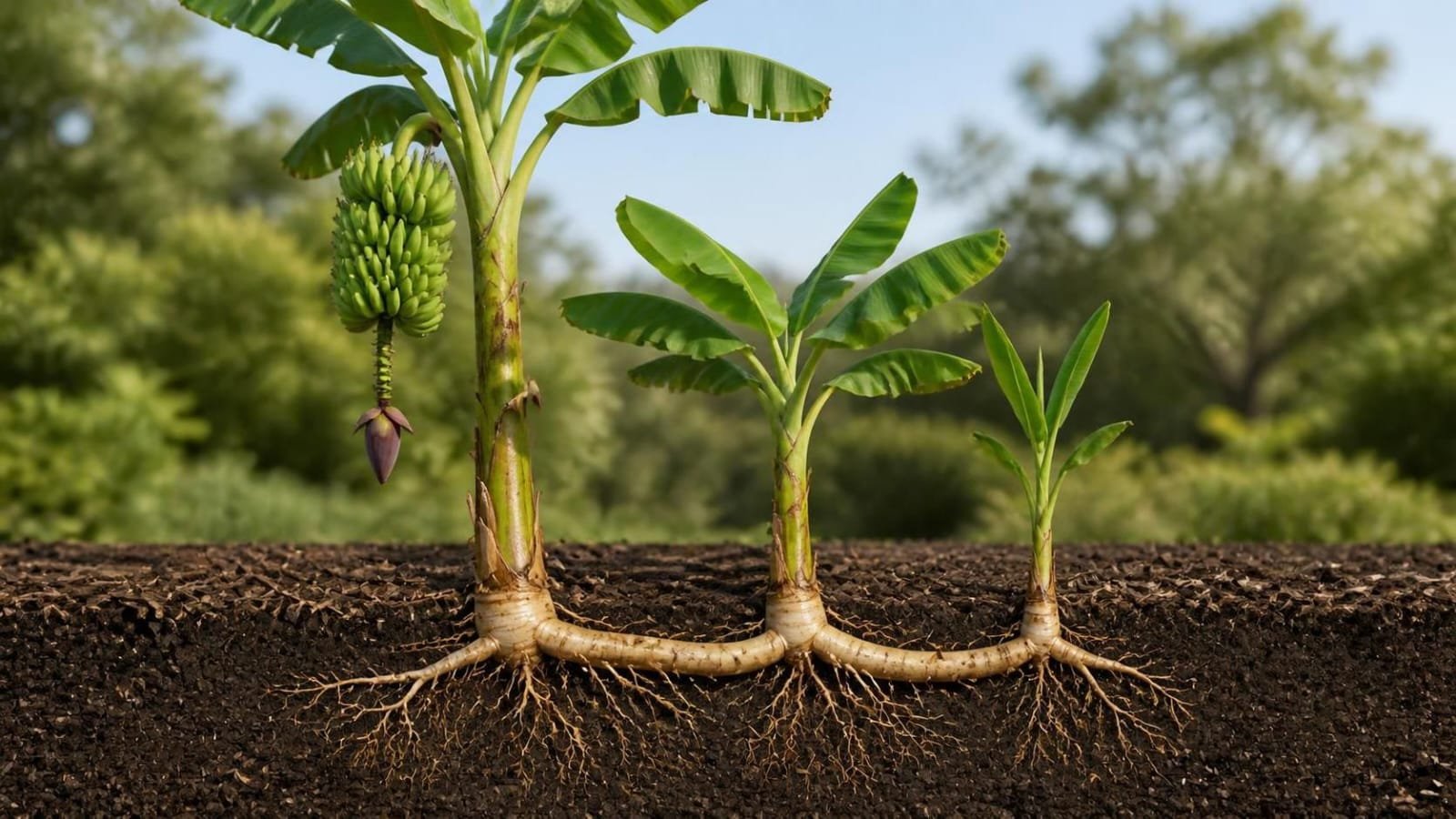
A banana “tree” isn’t a tree at all. The trunk-like column is a pseudostem, a tight bundle of overlapping leaf bases. Botanists call the whole plant a giant herb, and the Guinness World Records entry on the largest banana species says so too. That matters when you pick up a tape. For the giant highland banana, the pseudostem reaches about 15 m (49 feet). The unfurled leaves stand roughly 20 m (66 feet) off the ground. That extra five meters is leaf, not growth.
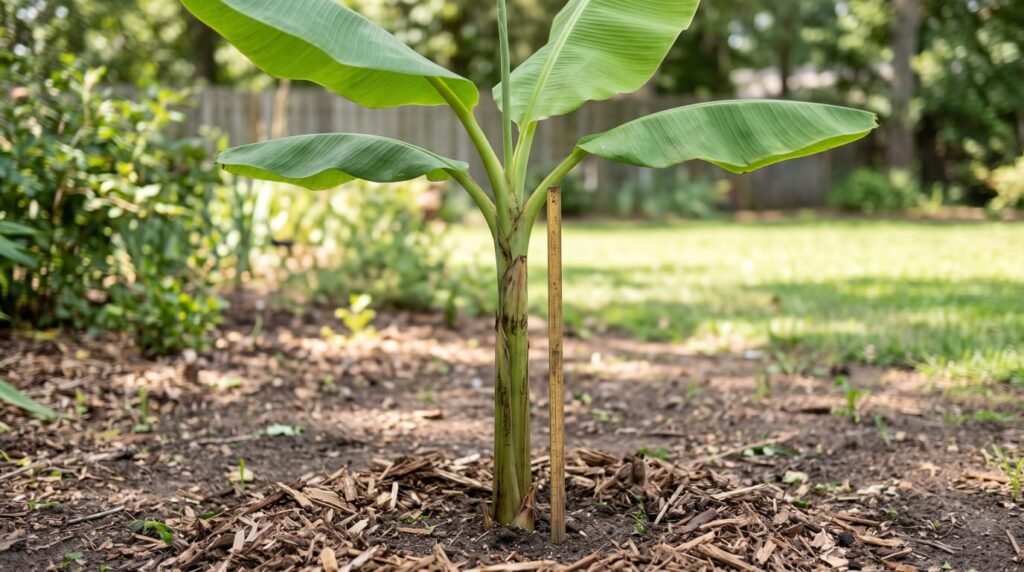
Here’s the kicker with most height figures online. Some quote the pseudostem, some include the leaves, and many never say which. That explains part of why one page says 10 feet and the next says 25 for what looks like the same plant. Variety explains the rest. To get a number you can compare, measure it like this:
- Hold a tape or marked pole against the pseudostem, starting at soil level.
- Read the height at the V, the notch where the two newest leaves split away from the top of the pseudostem. That’s your pseudostem height.
- Measure to the highest leaf tip separately. You’ll want that number if you’re checking clearance under eaves or power lines.
- Write both down with the date. A banana changes fast in warm weather, and one reading tells you little.
How tall does a banana tree get? Height by type
Most of us search “how tall is a banana tree” and hope for one number. There isn’t one. University of Florida’s IFAS Extension puts the range at about 6 feet for dwarf kinds to over 30 feet for the largest types. Where your plant falls in between depends on which banana you own.
| Banana type | Typical height | Worth knowing |
|---|---|---|
| Pink velvet banana (Musa velutina) | 3 to 4 feet | Small ornamental with bright pink fruit. |
| Chinese dwarf banana (Musella lasiocarpa) | 3 to 6 feet | Grown for its yellow flowers; the fruit is inedible. |
| Dwarf Orinoco | 5 to 6 feet | Vigorous for its size; listed as winter-hardy in zones 7 to 11. |
| Dwarf Cavendish | about 4 to 10 feet | Figures vary a lot: shorter in pots, taller in rich, frost-free ground. |
| Japanese fiber banana (Musa basjoo) | about 8 to 13 feet (2.5 to 4 m) | Grown for foliage; the fruit is inedible. Slow to reach full height in cool climates. |
| Taller Cavendish clones (Williams, Robusta, Lacatan) | about 12 to 20 feet | Lacatan is the tallest of the Cavendish group and Dwarf Cavendish the shortest; Grand Nain falls in between. |
| Lady Finger types | varies by cultivar | The name covers several cultivars. The common AAB type grown in Florida is tall and easily wind-damaged. |
| Giant highland banana (Musa ingens) | about 49 feet (15 m) pseudostem | A wild New Guinea species, not a garden plant. |
Read those as typical ranges. Sources disagree by several feet on the same cultivar, and that’s normal. A banana in rich, frost-free ground will outgrow the same cultivar in a pot. NC State Extension gives 12 to 20 feet for Musa acuminata, the species behind most dessert bananas. The Royal Horticultural Society lists 2.5 to 4 meters (about 8 to 13 feet) for Musa basjoo. It also says that can take 5 to 10 years.
Be a little suspicious of names. “Lady Finger” is attached to several different cultivars. “Dwarf Cavendish” gets used loosely for any short banana. If the tag just says “banana,” ask the seller for the cultivar. If nobody knows, plan for the taller end of the range. A short plant is an easy surprise to live with. A 20-footer outside the bedroom window is not.
How tall can a banana tree grow at the very top end?
The record holder is Musa ingens, the giant highland banana from the mountain forests of New Guinea. The Guinness World Records page lists a pseudostem up to about 94 cm thick. Its bunches can weigh as much as 60 kg. Some reports have individual plants reaching 30 m, but the record page says nobody has scientifically confirmed that. It’s a wild highland species, so don’t plan a backyard around it.
Closer to home, you’ll see 40 feet quoted for ordinary garden bananas. Be careful with that one. University guidance puts the largest types at over 30 feet and stops there. A plant would need every advantage to get that tall: warm weather, steady moisture, fertile soil and shelter from wind.
How fast a banana gets tall, and when it stops
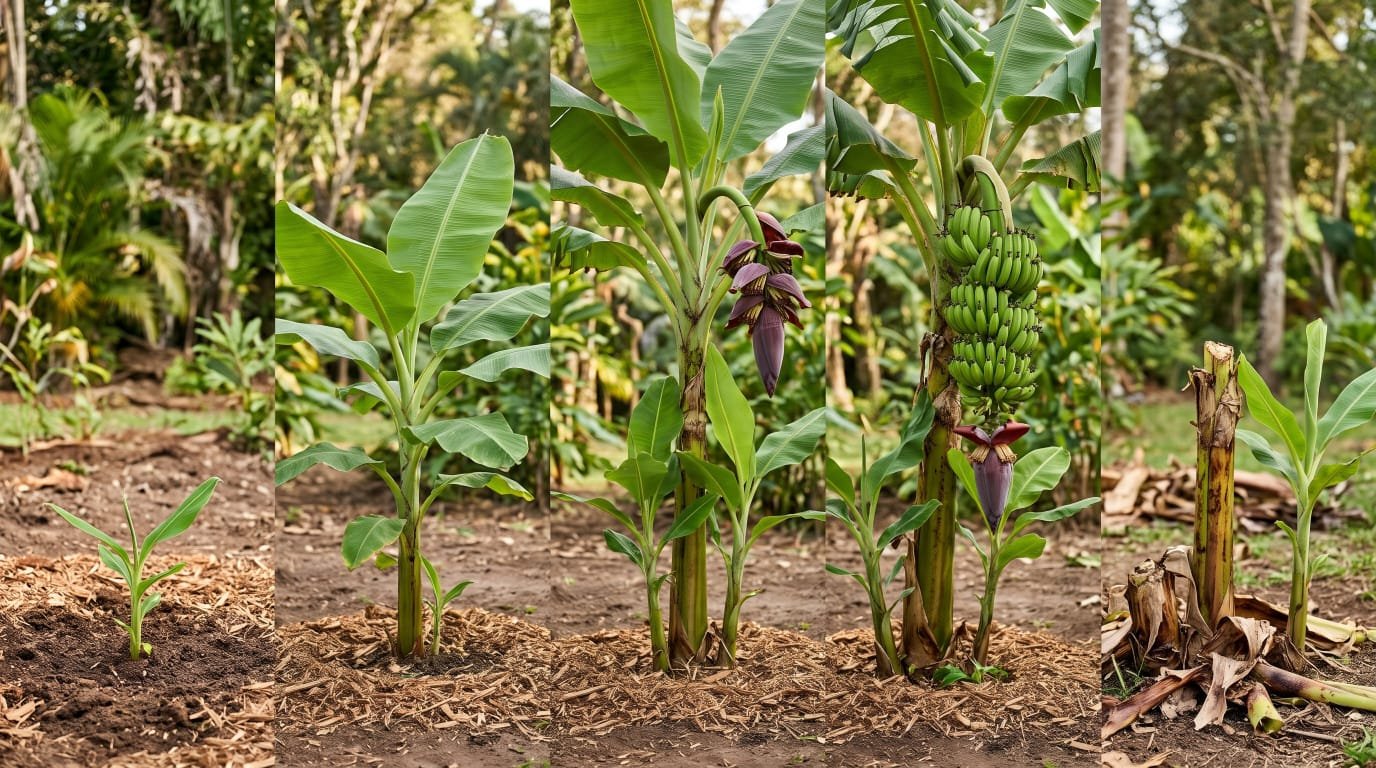
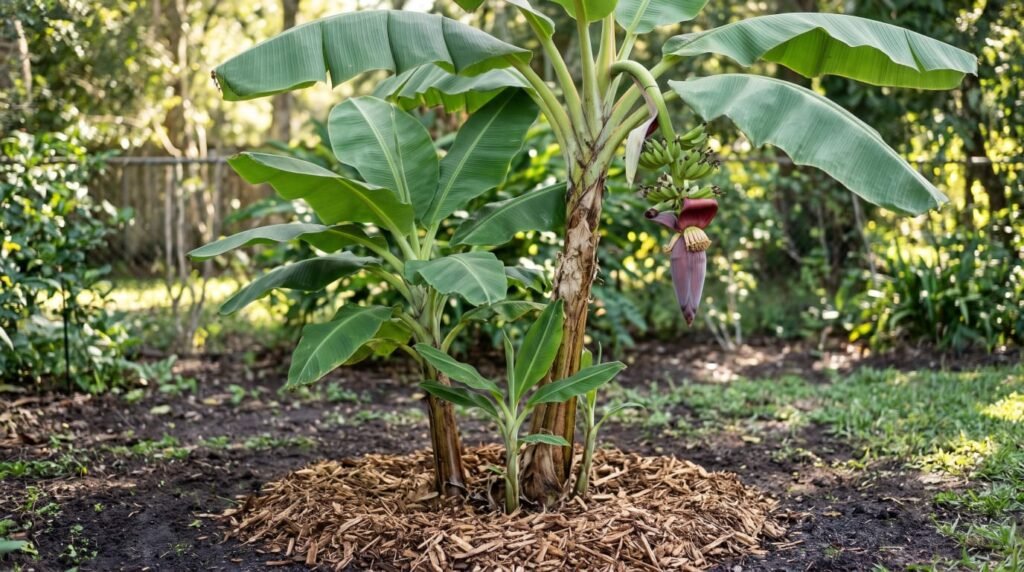
A banana stalk isn’t built to keep climbing for decades the way an oak does. Each pseudostem makes leaves until it has enough of them. Then it pushes a flower stalk up through its own center and fruits once.
In Florida extension guidance, the flower stalk shows up 10 to 15 months after planting. By then the plant has made 26 to 32 leaves. The bunch ripens 80 to 180 days later. So a banana in a warm climate reaches its full height in about a year or so. We lay out the timeline in How Long Does a Banana Tree Take to Grow? and cover the flowering stage in When Do Banana Trees Flower and Produce Fruit?.
Once the flower stalk is out, the pseudostem has essentially finished growing taller. After harvest it gets cut down and a sucker takes over. That’s the short answer to Do Banana Trees Only Fruit Once? It also means the height you measure belongs to one stalk. Two years from now you’ll be measuring a different one, even though the clump looks the same. Our guide to the banana tree life cycle and growth stages shows what each phase looks like.
Climate stretches or squeezes that timetable. Growth is best around 78 to 82°F. It slows below 60°F and stops at 50°F. A banana that races to full height in a Florida summer can take years to get there in a cool northern garden.
When your banana plant isn’t the height it should be
Most of us reach for fertilizer first. Sometimes that’s the right call. But plenty of short bananas are short for reasons feeding won’t fix, so start with the situation that matches what you see.
It’s a year old and still knee-high
If your banana has sat low for a whole season, you’re not alone. The cause is usually light, water or roots. Check the light first. Bananas put up with some shade, but shade slows them down, and a heavily shaded plant stays stunted.
Then check the soil. Constantly wet soil, even without flooding, stunts bananas and yellows the leaves, because the roots sit in saturated ground. Push a finger a few inches down a day after watering. If it’s still soggy, drainage is your height problem. Our guide to banana tree soil covers how to fix it.
If the plant is in a container, slide it out and look. Roots circling the pot mean it has outgrown the space.
Last year it was 8 feet, now it’s a stump with a new shoot
Cold is the usual culprit. Freeze damage looks water-soaked at first. Then the leaves and pseudostem turn brown and collapse. Temperatures below 28°F can kill a banana to the ground. New growth normally sprouts from the underground rhizome when warm weather returns.
A common situation: a Dwarf Cavendish reaches full height by autumn and a hard frost flattens it. Spring sends up a fresh sucker that has to start from scratch. A banana killed to the ground that resprouts in spring typically won’t fruit until the following year. Hold off judging the plant until warm weather is back. Then see Banana Tree Pruning and Brown Leaves for what to cut and what to leave.
Tall, thin and leaning
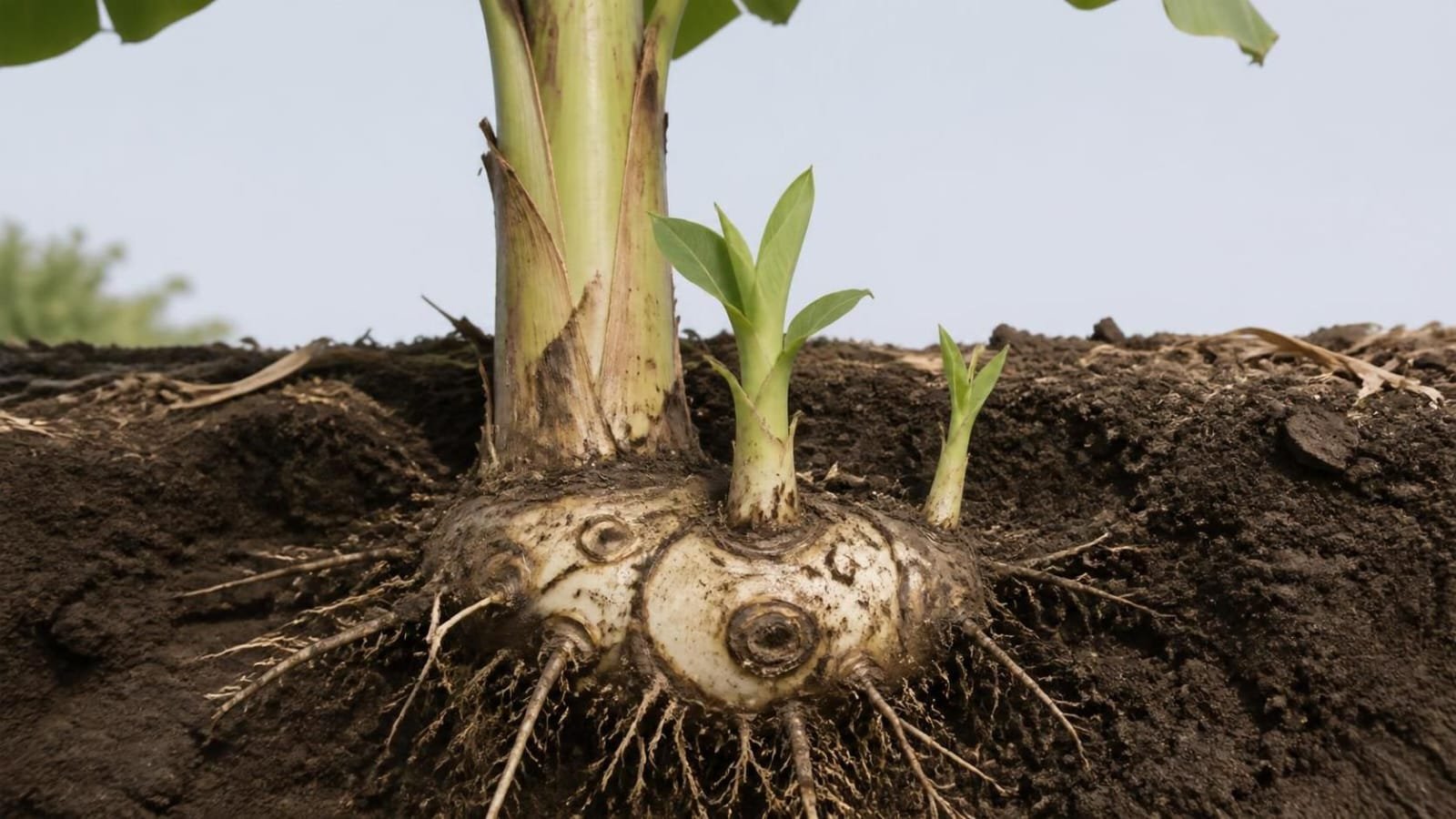
Crowding and wind are the two usual causes. When too many pseudostems share one clump, they compete for water, light and nutrients. Bunches shrink and flowering takes longer. The standard fix is to keep one stalk fruiting, one about half grown and one small sucker. Remove the rest at ground level. Healthy suckers don’t have to go to waste, either. You can dig them out and replant them, as covered in Propagating Banana Plants.
Wind is the other half. Winds above about 25 mph can topple tall cultivars, and above about 45 mph even short ones. If your yard is exposed, that’s a fair argument for a dwarf.
Stalled at a modest height, with folding or yellowing leaves
Folding leaves, pale green to yellow foliage and leaves dying early are the classic signs of drought. Drought also delays flowering. Bananas drink heavily, so a good ring of mulch for banana trees helps hold moisture. Our notes on banana tree care cover watering and upkeep in general.
If light, water and drainage all check out, look at feeding next. Bananas draw heavily on potassium, so a fertilizer high in potash suits them. Follow the product label for rates and check local rules. See banana tree fertilizer for how to choose one.
Diagnosing a stalled plant from a description has limits. Thirst, soggy roots, a nutrient shortage and root damage from nematodes can all slow a banana, and they look alike from above. If the plant stays small after you’ve fixed the obvious, dig carefully near the base for dead roots or tunneling. Or take a sample to your local extension office.
Banana tree size beyond height: spread, leaves and roots
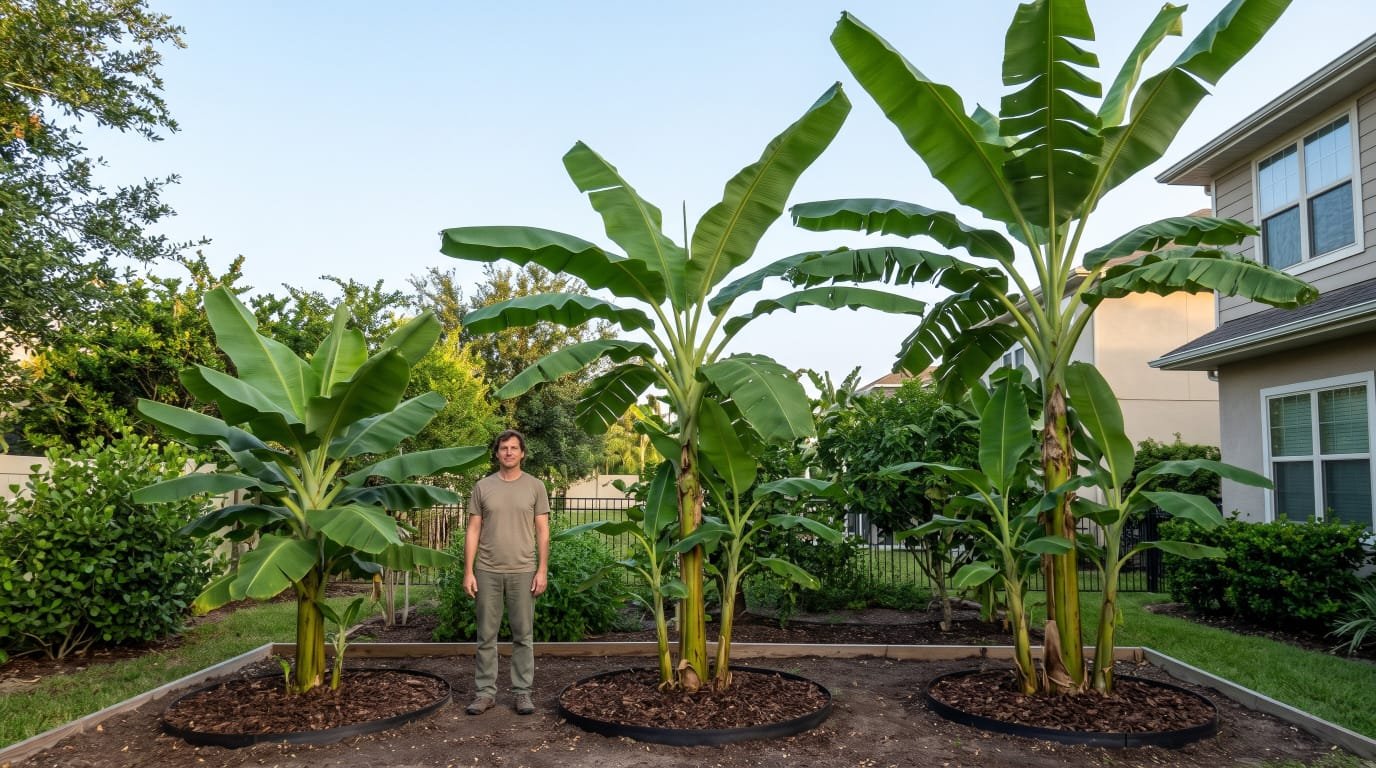
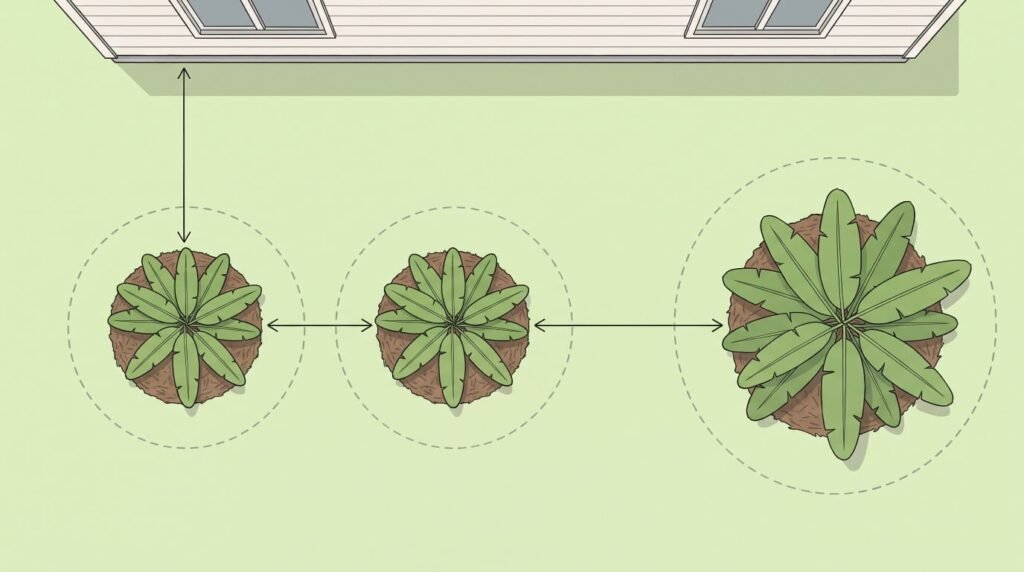
Plenty of people plant a banana against a wall or fence because the young plant looks narrow in its pot. Give it a season and you’ll see the problem. A banana that reaches 10 to 30 feet spreads about 10 to 15 feet wide. Even modest types run 6 to 10 feet across. Leaves on larger plants can be 6 to 10 feet long.
Roots reach further than the leaves. On a mature clump they can extend 6 to 10 feet beyond the base. Lawn feed-and-weed products used nearby may reach them and cut fruiting. Keep mowers and string trimmers well away from the pseudostem, since damage there weakens it.
For spacing, dwarf types can sit as close as 8 feet from each other. Full-size varieties want 12 feet or more. Plant at least 10 feet from outdoor walls, and keep tall bananas away from windows, because a pseudostem that topples in a storm is a real hazard. How to Plant a Banana Tree walks through the planting steps once you’ve picked the spot.
Keeping a banana tree smaller: pots, dwarfs and cold gardens
If space is tight, the best fix is the variety you start with, because height is largely built in. The Old Farmer’s Almanac lists dwarf types in containers at 3 to 6 feet. It suggests a mature plant may do best in a 15- to 25-gallon pot. Pot size sets a ceiling as much as variety does, and Banana Trees in Pots covers choosing and repotting.
Overwintering adds a catch. Container plants cut back close to the soil each fall may never flower, according to NC State Extension. So a small pot-grown banana can end up small and fruitless.
In colder gardens, the height you get depends on whether the pseudostem survives winter. The RHS figures for Musa basjoo assume a sheltered, full-sun spot and years of growth. Expect less after a hard winter cuts it back.
Quick answers about banana tree height
How tall is a banana tree in a pot?
Dwarf types in containers are usually listed at 3 to 6 feet, and a mature plant may need a 15- to 25-gallon pot.
Do banana trees keep growing taller every year?
No. Each pseudostem grows to full height, flowers, fruits once and is replaced by a sucker, so the height you see belongs to one stalk at a time.
How long does a banana tree take to reach full height?
In warm climates the flower stalk appears about 10 to 15 months after planting, which marks full height. Cool climates take much longer, with Musa basjoo needing 5 to 10 years in the UK.
What is the tallest banana plant?
Musa ingens, with a pseudostem around 15 m (49 feet) and leaves reaching about 20 m.
Measure your plant to the V this week, note the cultivar, and compare both with the table above. If it sits well below its range, the situations in the middle of this guide will point you to the likely cause. If it’s on track, watch the top of the pseudostem for the flower stalk. That’s your sign its height is done.