
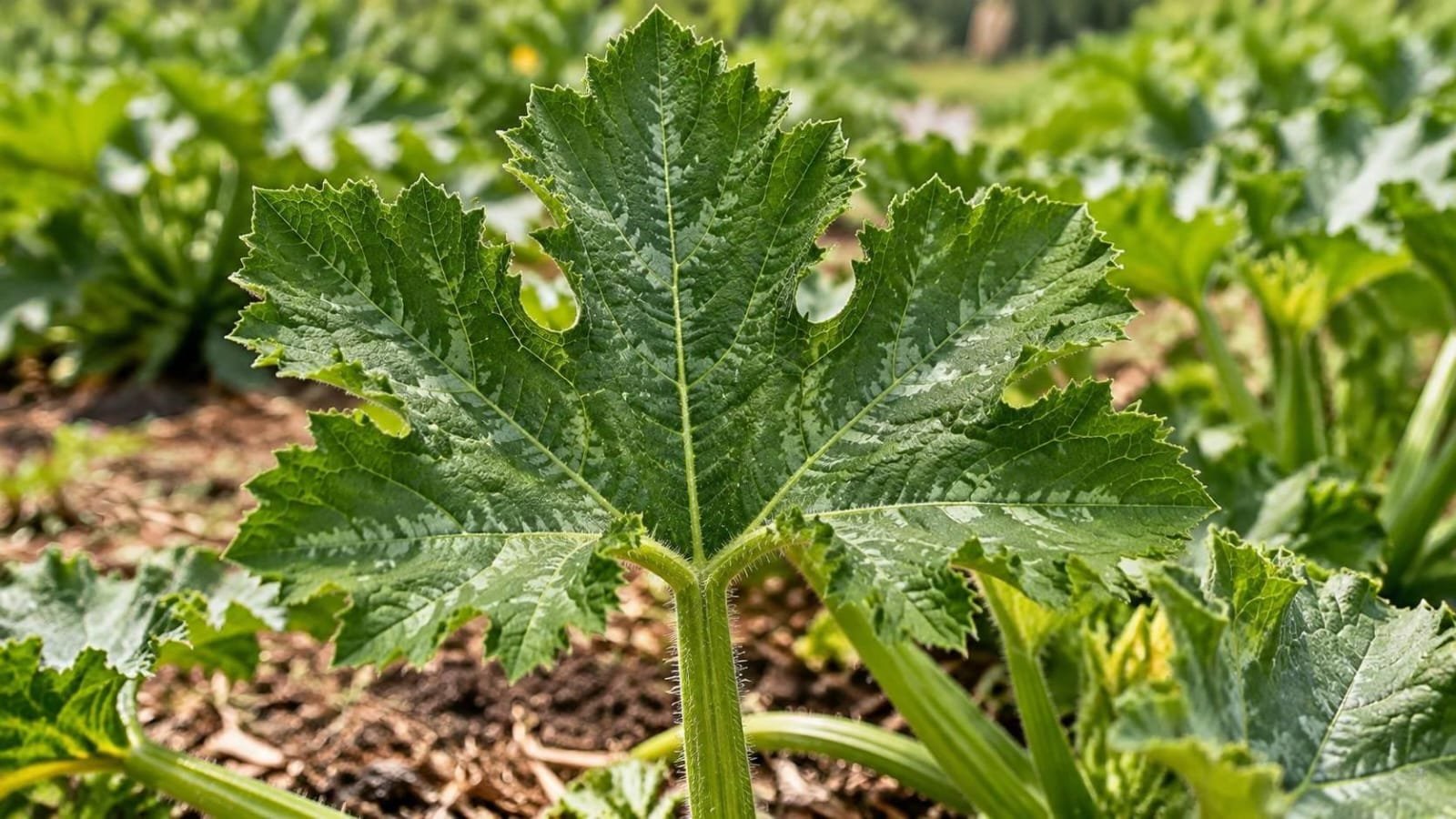
A zucchini leaf is large and broad, cut into three to five pointed lobes like a maple leaf or an open hand. It is dark green, rough to the touch, and held up on a long, hollow, prickly stalk. Many varieties also carry silvery patches along the veins. That silver is often natural, though a few look-alikes are worth ruling out.
Take one mature leaf and run through these checks in order. They take about a minute and rule out most look-alikes.
Start With the Shape
Hold a mature leaf flat and count the lobes. Zucchini usually shows three to five, separated by deep notches, with slightly toothed edges and pointed tips. The outline is what gardeners call palmate, meaning it spreads from a single point like the fingers of a hand.
The upper surface is medium to dark green, and the underside is paler with more prominent veins. Mature leaves are large and broad, and a healthy plant forms a bushy mound two to three feet tall and wide, according to Epic Gardening’s growth stage guide. Plan for that space before choosing raised beds or containers and pots.
Then Touch the Leaf and the Stalk
Zucchini foliage feels rough, close to fine sandpaper. Stiff hairs cover the surface and run along the stems. Those hairs can irritate skin, so gloves make harvest more comfortable.
Follow a leaf down to its stalk. On zucchini it is long, thick, hollow, and prickly, rising from a central crown. Most garden zucchini are bush types that do not run along the ground like a pumpkin vine, though a few vining varieties exist. Use habit as one clue among several.
The Silver Patches Everyone Worries About
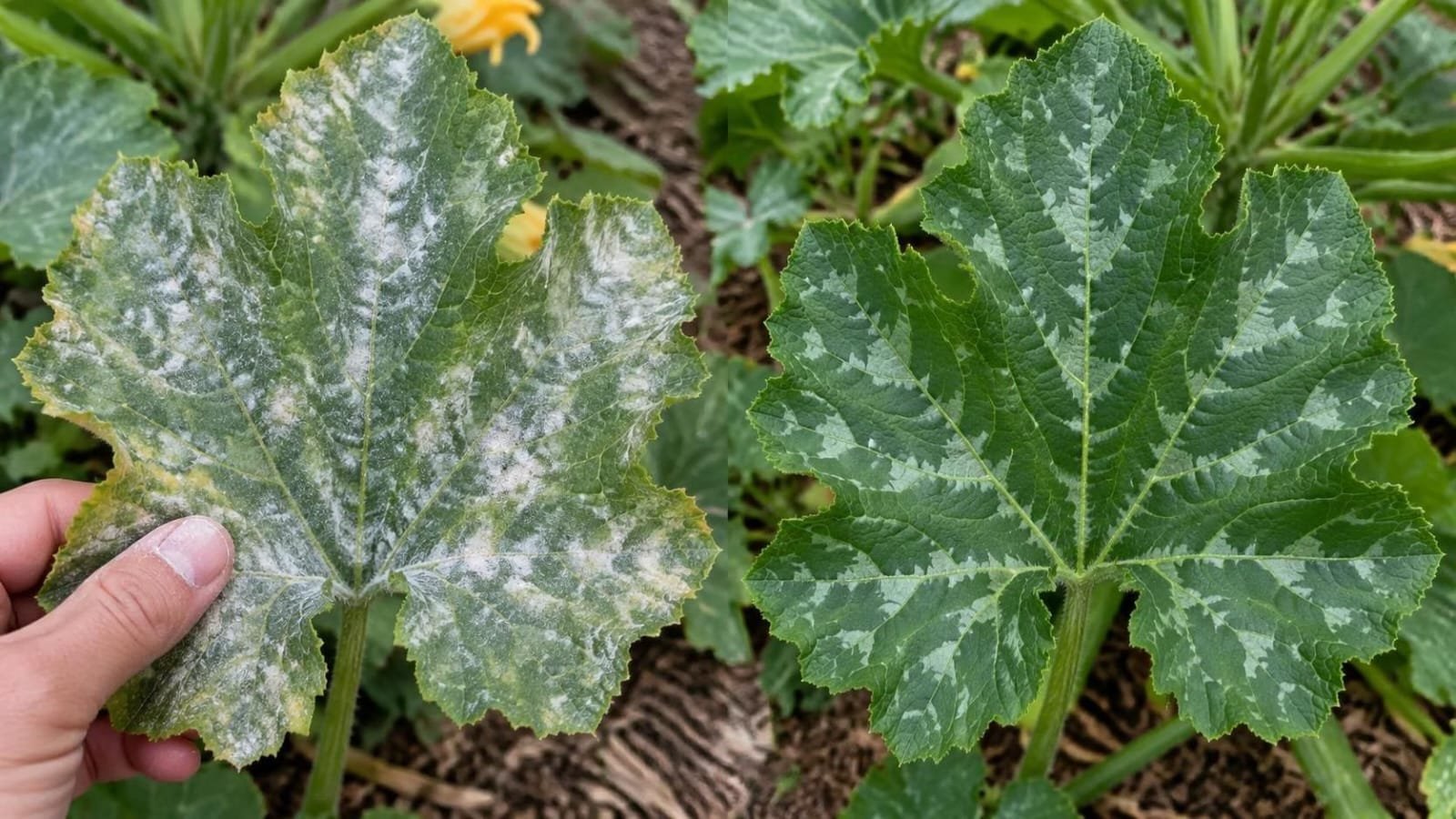
Most of us see white on a leaf and think powdery mildew. If you did, you’re not alone. Many zucchini varieties carry silvery-white patterning that follows the veins. Some show it from the seedling stage, and in others it develops on the oldest leaves as the plant matures.
A Michigan gardener who wrote to Ask Extension described silver spreading along the veins of older leaves. The reply called it a normal sign of a mature leaf, unless insects are feeding underneath or fungal growth or dried-out spots are present.
Another documented case came from Alamogordo, New Mexico, where a gardener described white that looked like grains of sand. The New Mexico State University extension specialist replied that the blotches are part of the leaf, that tiny surface hairs can glitter like sand in the light, and that natural blotches will not rub off. Mildew looks like a dusting of flour.
That gives you the quickest test there is. Run a finger across a pale area. If the color stays put, it belongs to the leaf. If it comes off like flour, think mildew.
| What to check | Natural silvering | Powdery mildew |
|---|---|---|
| Rub test | Stays put | Wipes off like flour |
| Pattern | Flat patches that follow the veins and repeat across leaves | Irregular, scattered, fuzzy round patches |
| Where | Mostly the upper surface | Upper and lower surfaces, and stems |
| Timing | Present from the seedling stage or on older leaves, then stable | Usually appears later, worst on the oldest leaves, which may yellow and dry |
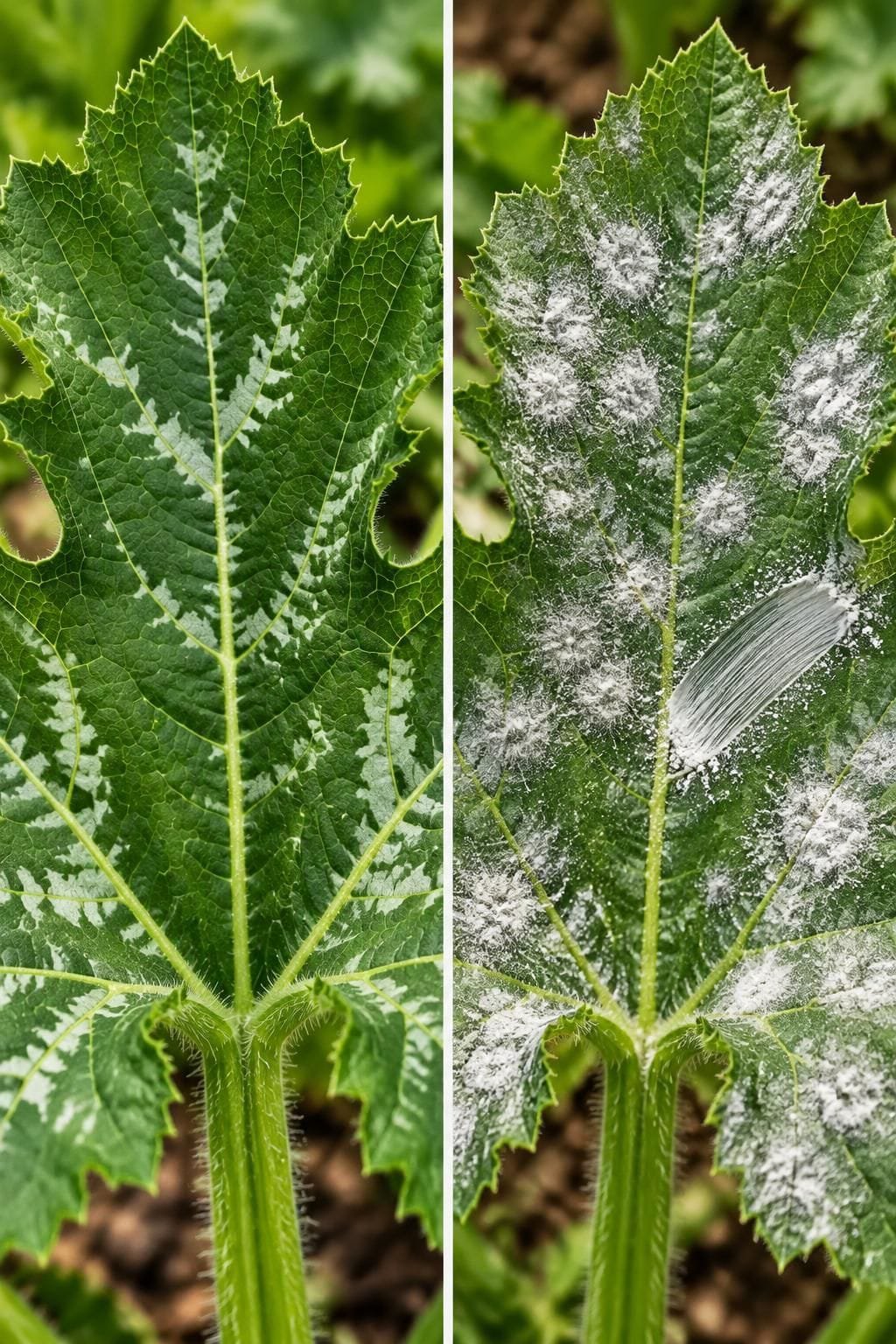
One look-alike deserves a closer look. Squash silverleaf disorder comes from immature whiteflies feeding on the underside of the leaf. According to the University of Georgia Extension, the feeding creates air pockets beneath the leaf’s upper layer, which gives it a silvery look. Kentucky Extension adds that the silvering can start at the veins, appears on newly developing leaves, and can cover whole plants within days in a heavy outbreak. Turn a leaf over. Tiny whiteflies, flattened nymphs, spreading silver on new growth, or a stunted plant all point to whiteflies.
Fair enough if you still have doubts. Some varieties have no silver at all, which is perfectly healthy, and a written description cannot settle every case, so a county Extension office can look at a leaf in person. If it is mildew, powdery mildew on zucchini covers identification and treatment, and white spots on zucchini leaves covers other causes of pale spotting.
Seedlings Don’t Look Like Zucchini Yet
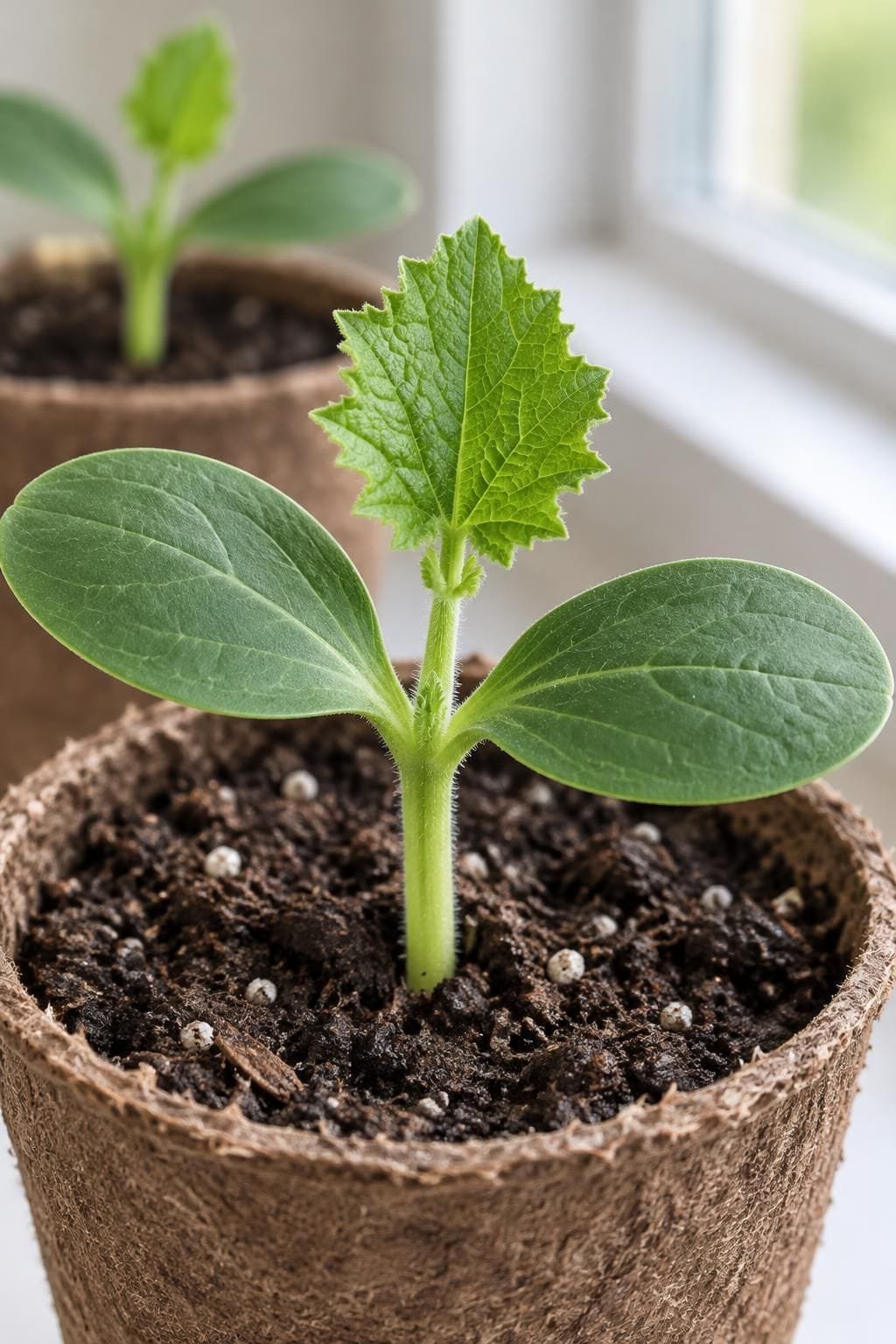
This is where plenty of gardeners panic. The first leaves, called cotyledons, are smooth, broad, and oval, nothing like the lobed leaf you were expecting. In warm soil, seeds can sprout in about a week; University of Saskatchewan extension reports 5 to 6 days at roughly 75°F. The third leaf to appear is the first true leaf. It comes up between the pair as a single, slightly wavy-edged leaf, and the deep lobes and rough feel develop gradually.
The cotyledons stay while the first true leaves develop, then yellow and drop off, which is normal. Squash-family seedlings look so alike at this stage that you often cannot tell zucchini from cucumber until true leaves develop. If you are starting from scratch, how to grow zucchini from seed covers sowing and thinning.
Zucchini, Cucumber, or Pumpkin?
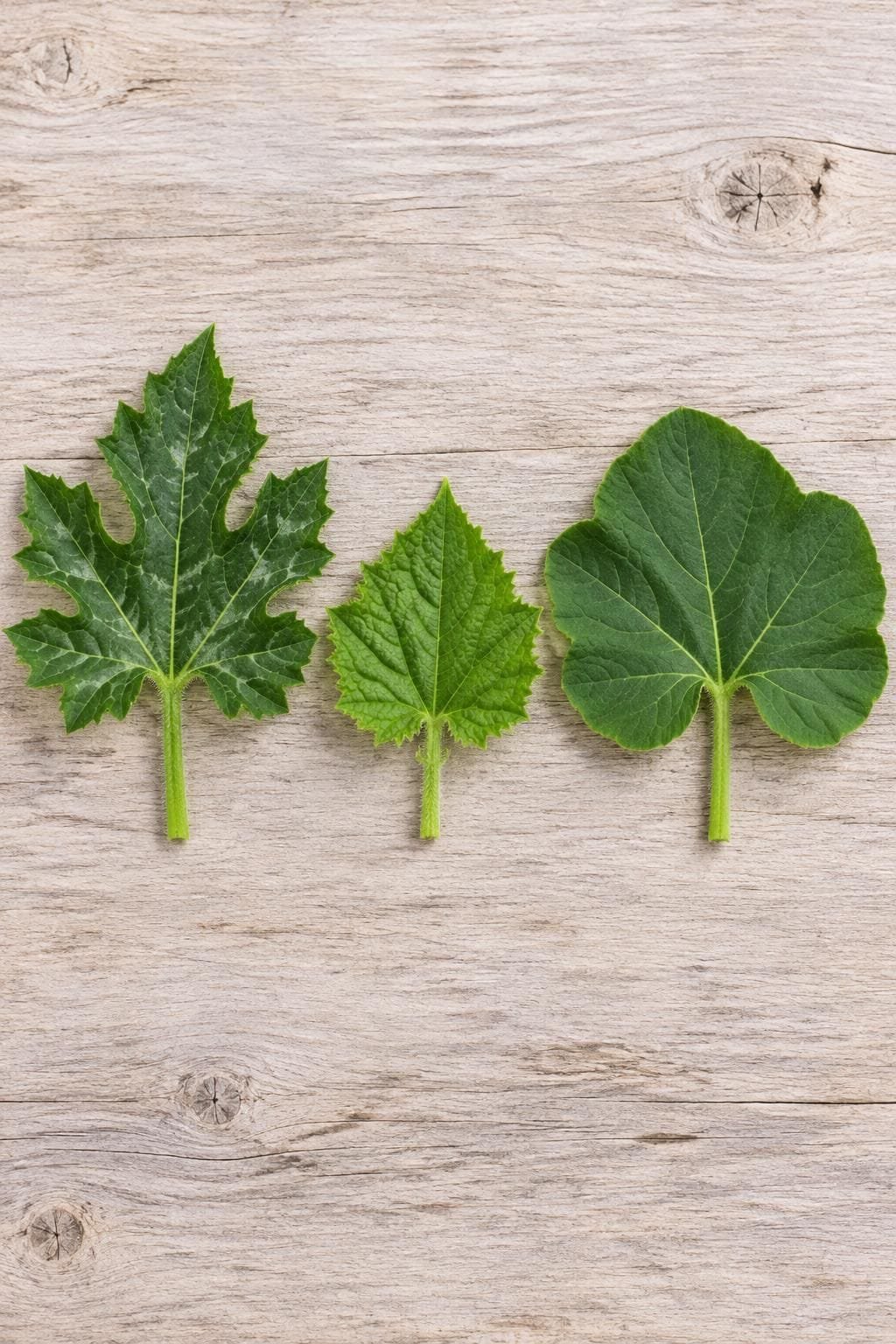
Compare the shape first. Zucchini leaves are deeply cut with pointed lobes. Cucumber leaves tend to be smaller and more angular, with shallow lobes. Pumpkins are harder, because many belong to the same species as zucchini, Cucurbita pepo, according to University of Saskatchewan extension, so their leaves can look nearly identical.
Habit settles most doubts. A bushy mound points to zucchini, while long sprawling vines point to cucumber or pumpkin, and the fruit gives the final answer. The flowers can help too. Male vs female zucchini flowers shows what to look for, and if your plant is producing only males, read why zucchini makes only male flowers. The guides on zucchini not flowering and how to hand-pollinate zucchini cover the next steps.
When a Leaf Looks Wrong
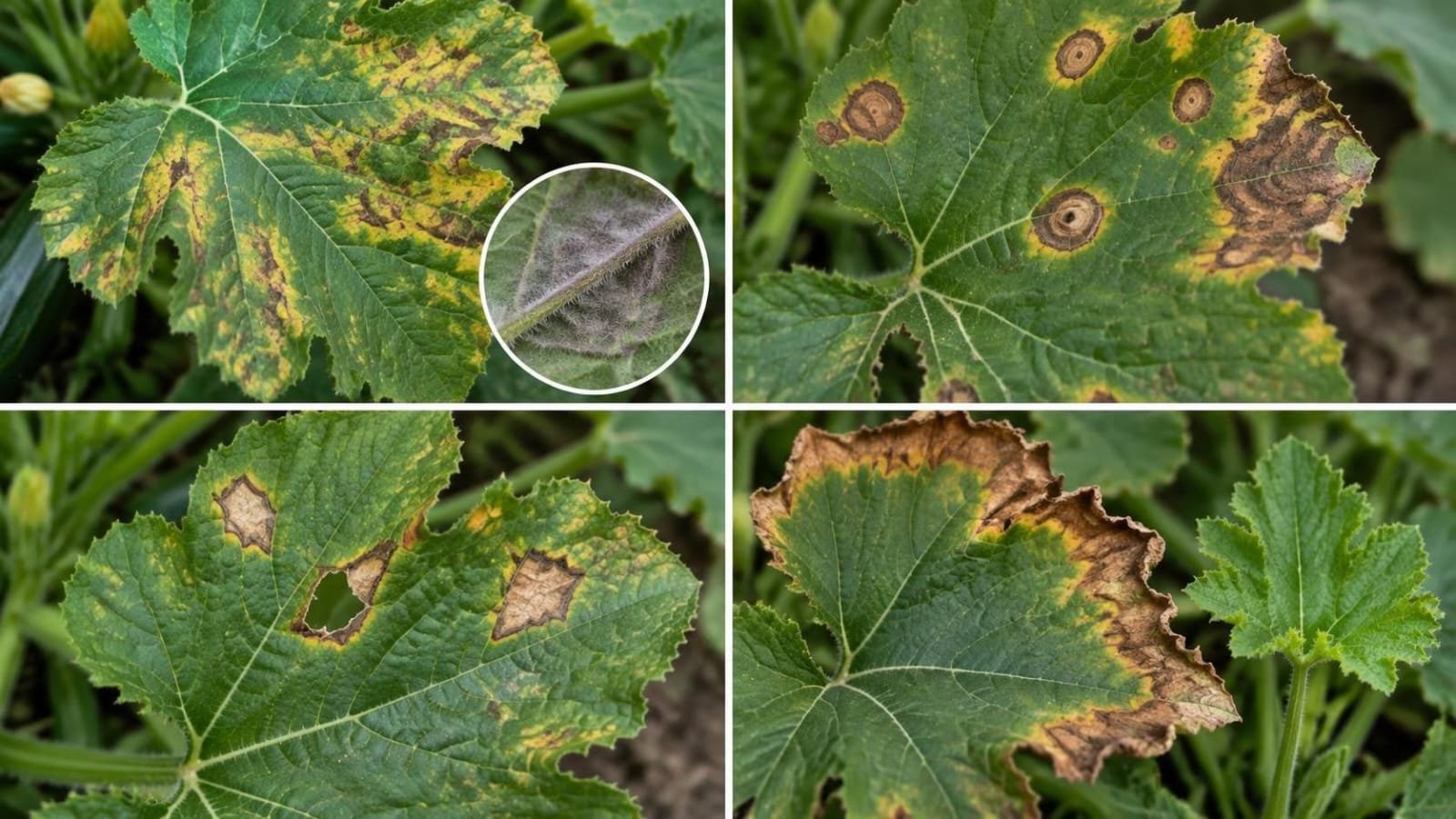
Once you know what healthy foliage looks like, trouble stands out. Match what you see to the closest description:
- Yellowing leaves. If the fruit itself is yellowing, the causes differ, so see why zucchini fruit turns yellow.
- Brown spots or dry patches on the leaf surface.
- Holes or chewed edges: start with identifying pests and leaf damage.
- A vine that wilts suddenly, with sawdust-like frass at the base: squash vine wilting and frass at the stem base.
- New leaves that curl, crumple, or show thickened veins and yellowing can point to a virus, including some that whiteflies carry.
- Several symptoms at once: the zucchini diseases and pests guide with photos helps sort them out.
- Don’t strip off silver-patterned leaves until you have checked the underside for whiteflies. If the leaf is clean, it is healthy and the plant still needs it.
- Don’t spray for mildew until the rub test says it is mildew. If you do need to treat it, follow the product label and your local regulations.
One last question comes up often: can the leaves be eaten? Some cooks do use them, though the prickly texture matters. Can you eat zucchini leaves? covers safety, taste, and recipes, and how to grow zucchini is the place to start if you are planning next season’s bed.
2 thoughts on “What Do Zucchini Leaves Look Like?”